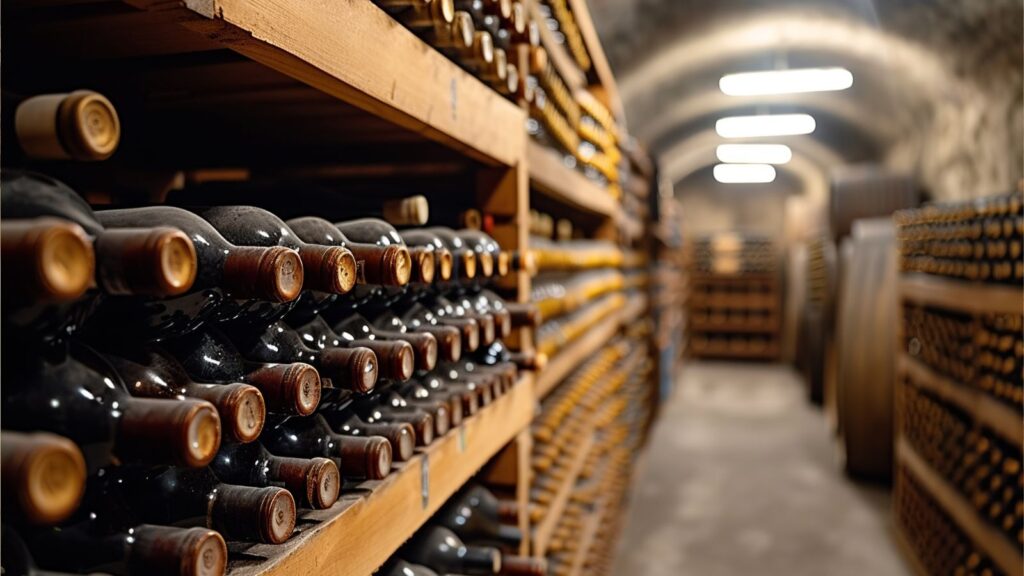
Wine is one of the most environmentally sensitive products in existence. The chemical processes that define how a vintage develops over time are directly influenced by the atmospheric conditions surrounding each bottle, and moisture is among the most consequential of those conditions. A cellar that allows humidity to drift outside the recommended range does not simply create a suboptimal storage environment; it actively accelerates the degradation of the very characteristics that make fine wine valuable.
In this article, we examine the science behind humidity management in wine storage, the systems and technologies available for maintaining stable conditions, and the operational challenges that commercial cellars and private collectors face in sustaining those conditions year-round. Whether you are managing a large-scale commercial winery or a private collection, the principles and practices covered here provide a practical foundation for protecting your inventory at every stage of the aging process.
Key Takeaways
- Natural cork relies on adequate ambient humidity to maintain its seal against the glass neck; humidity below 60% causes cork to shrink and allows oxygen ingress that accelerates oxidation.
- The industry-recognized optimal humidity range for wine storage is 60% to 70%, a window that keeps corks supple while preventing the mould growth associated with excessive moisture.
- Both ultrasonic humidifiers and desiccant dehumidification systems offer precise moisture management for different climate conditions, and system selection should be based on local environmental characteristics.
- Smart IoT monitoring devices with cloud connectivity and automated alerts provide the highest level of environmental oversight and are the most reliable option for commercial cellar operations.
- Passive climate management through high-performance insulation and continuous vapor barriers reduces the load on mechanical systems and provides a stable baseline for active humidity control.
The Science of Humidity in Wine Aging
The relationship between atmospheric moisture and wine quality operates at both the chemical and physical level. Inside the bottle, the aging process involves complex reactions between acids, tannins, esters, and alcohol that depend on the wine remaining in a sealed, oxygen-controlled environment. The cork is the mechanism that maintains that environment, and its ability to perform that function is directly dependent on the humidity of the air surrounding it.
Understanding this relationship is the starting point for appreciating why humidity management is a technical requirement rather than a comfort consideration in any serious wine storage environment.
Impact of Moisture on Cork Integrity
Natural cork is a porous, hygroscopic material that maintains its physical properties within a specific moisture range. When the surrounding air is adequately humidified, the cork remains supple and expanded against the glass neck of the bottle, forming the tight seal that prevents meaningful oxygen exchange between the wine and the outside atmosphere. This seal is what allows the controlled micro-oxygenation that fine wine aging requires while preventing the oxidative spoilage that uncontrolled oxygen ingress causes.
When cellar humidity falls below the recommended threshold, the cork loses moisture to the surrounding air and begins to shrink. Even microscopic gaps in the seal created by this shrinkage are sufficient to allow oxygen to enter the bottle at a rate that accelerates oxidation, strips aromatic complexity, and ultimately renders the wine undrinkable before it reaches its intended peak. For high-value vintages that require years or decades of cellaring, cork integrity is the single most critical variable in determining whether the investment reaches its full potential.
Preventing Label Degradation and Mould Growth
While the wine inside the bottle is the primary concern, the external presentation of a collection has genuine financial significance for commercial operations and serious private collectors. Labels that are degraded by mould, staining, or moisture damage reduce the market value of a bottle and complicate inventory management in commercial settings where provenance documentation is tied to label condition.
The challenge is that the conditions that protect cork integrity, specifically adequate ambient moisture, also create an environment that can support mould growth if humidity rises above the upper threshold. Managing the cellar within the optimal range addresses both concerns simultaneously. The table below illustrates how specific environmental conditions affect the key indicators of cellar health:
| Environmental Factor | Low Humidity Impact | High Humidity Impact | Optimal Result |
| Cork condition | Drying and shrinkage | Mould and rot | Perfect seal |
| Label quality | Peeling and fading | Staining and fungi | Pristine appearance |
| Cellar longevity | Increased oxidation | Structural damage | Maximum longevity |
Ideal Humidity Ranges for Long-Term Storage
Defining the correct target range for a wine storage environment is not a matter of approximation. The physical properties of natural cork and the chemical stability of the wine aging process have been studied extensively, and the evidence consistently supports a specific and relatively narrow humidity window as the standard for professional storage.
Defining the Optimal 60% to 70% Range
The 60% to 70% relative humidity range is the accepted industry standard for long-term wine storage across both commercial and private cellar environments. Within this range, cork maintains the moisture content it requires to remain supple and fully expanded against the bottle neck, and the risk of mould growth on labels, packaging, and cellar surfaces is effectively managed. This window broadly replicates the natural conditions found in the traditional underground cave cellars that established the benchmark for wine aging environments centuries ago.
Maintaining conditions consistently within this range requires both appropriate mechanical systems and a cellar structure capable of limiting the influence of external weather variations on the internal environment. Neither element alone is sufficient; the combination of good passive design and reliable active climate control is what produces the stability that long-term aging demands.
Risks of Low Humidity and Cork Drying
When cellar humidity falls below 60%, the drying effect on natural cork accelerates progressively as conditions move further from the optimal range. The consequences of a compromised cork seal are not immediately visible but develop over time as the wine experiences increasing oxygen exposure. The specific problems that emerge from inadequate cellar humidity include:
- Accelerated oxidation that strips the wine of its fruit character and aromatic complexity prematurely.
- Evaporation of wine through the porous cork material, reducing the fill level and increasing the ullage space above the wine.
- Irreversible damage to the flavour profile of vintages that cannot be returned to their intended trajectory once oxidation has progressed.
Risks of High Humidity and Structural Damage
Humidity levels that consistently exceed 70% introduce a different set of problems that affect the presentation and structural integrity of the cellar rather than the wine itself. The table below summarises the risk profile across the full humidity range relevant to wine storage:
| Humidity Level | Primary Risk | Impact on Bottle |
| Below 50% | Cork desiccation | Oxidation and leakage |
| 60% to 70% | None (ideal range) | Preserved integrity |
| Above 80% | Mould growth | Label decay and rot |
Mould growth in excessively humid cellars spreads rapidly across paper labels, wooden racking, and cellar walls, creating conditions that are difficult and expensive to remediate and that can compromise the structural integrity of the storage environment over time. Proactive monitoring that triggers alerts when conditions approach the upper threshold is the most effective way to prevent this deterioration from establishing itself.
Humidification Systems and Technologies
Achieving consistent winery humidity control depends on selecting mechanical systems that are matched to the specific climate challenges of the storage environment. The appropriate technology varies depending on whether the primary challenge is maintaining adequate moisture in a dry climate or removing excess moisture in a naturally damp one, and a thorough assessment of local conditions should precede any system selection decision.
Active Humidification Systems for Dry Climates
In arid environments, maintaining the minimum 60% humidity threshold requires active introduction of moisture into the cellar air. Two primary technologies are used for this purpose in professional wine storage environments.
Ultrasonic humidifiers use high-frequency vibration to generate a fine mist that evaporates rapidly into the air without raising the ambient temperature of the cellar. Their precise control characteristics and energy efficiency make them well suited to smaller and medium-sized cellars where accurate moisture delivery without thermal impact is the priority.
Evaporative cooling units pass air over a wet medium to increase humidity through natural evaporation. These systems integrate effectively with existing cellar cooling infrastructure and provide a balanced approach to climate management that addresses both temperature and humidity simultaneously. They are particularly appropriate for cellars where the cooling system requires upgrading alongside the humidification provision.
Dehumidification Solutions for Damp Environments
In naturally humid climates or cellars with significant moisture infiltration from surrounding soil or structure, the management challenge is removal rather than addition of moisture. Two dehumidification technologies are commonly used in professional wine storage contexts.
Refrigerant dehumidifiers cool the air to condense moisture, which is collected and drained away from the cellar. These systems are effective across a broad range of ambient temperatures and are well suited to moderate climates where humidity fluctuates seasonally rather than remaining consistently elevated.
Desiccant dehumidification systems use hygroscopic materials to absorb moisture directly from the air, making them particularly effective in cooler cellar environments where refrigerant systems struggle to achieve adequate condensation. Their performance advantage in low-temperature conditions makes them the preferred choice for deep or naturally cool cellars in high-humidity locations.
The table below summarises the primary application and efficiency characteristics of the main humidification and dehumidification technologies:
| System Type | Primary Use | Efficiency |
| Ultrasonic | Dry climates | High |
| Refrigerant | Damp climates | Moderate |
| Desiccant | Cold and damp climates | Very high |
When integrating any of these systems, sensor placement away from direct airflow, regular filter maintenance, and automated alert configuration are essential operational practices that apply regardless of the technology selected.
Monitoring and Maintaining Environmental Stability
Mechanical climate control systems can only protect a wine collection if the data driving their operation is accurate and the monitoring infrastructure is capable of detecting deviations before they cause damage. The investment in high-quality monitoring equipment is as important as the investment in the humidification or dehumidification hardware itself.
Selecting Reliable Hygrometers and Sensors
The accuracy of the sensor used to measure cellar humidity directly determines the reliability of every automated response the climate control system makes. Low-accuracy sensors that drift over time or respond slowly to environmental changes create the conditions for prolonged exposure to damaging humidity levels that the control system believes are within range. For commercial operations and serious private collectors, professional-grade digital sensors with real-time alert capability and remote connectivity are the appropriate specification.
Smart IoT monitoring devices that transmit data to cloud-based platforms allow cellar managers to track conditions from any location and receive immediate notification when readings approach threshold values. This capability is particularly valuable for commercial operations where the financial consequences of a monitoring failure are significant and where regulatory compliance requires demonstrable evidence of environmental oversight.
The Importance of Data Logging for Compliance
Automated data logging creates a continuous historical record of cellar conditions that serves multiple purposes in a commercial wine storage context. It provides the documentation required to demonstrate regulatory compliance during audits, supports quality assurance processes by confirming that storage conditions have met the standards applicable to the inventory, and creates the analytical basis for identifying patterns that indicate developing equipment or structural issues before they become acute problems.
For commercial wineries that store client collections or sell aged vintages with provenance documentation, the ability to demonstrate consistent storage conditions throughout the aging period is a direct contributor to the credibility and market value of the inventory. A detailed, continuous data log is the most reliable evidence available for this purpose.
Calibrating Equipment for Precision
All humidity sensing equipment experiences drift over time, meaning that readings gradually deviate from the true value even in the absence of any obvious malfunction. Regular calibration against a known reference standard is the only way to detect and correct this drift before it leads to environmental conditions that differ materially from what the control system believes is present in the cellar.
The table below compares the accuracy, connectivity, and maintenance requirements of the monitoring technologies commonly used in professional wine cellar environments:
| Device Type | Accuracy Level | Data Connectivity | Maintenance Needs |
| Analogue hygrometer | Low | None | Frequent manual checks |
| Digital sensor | Medium | Local display | Annual calibration |
| Smart IoT monitor | High | Cloud and Wi-Fi | Periodic firmware updates |
| Industrial data logger | Very high | Hardwired and network | Professional certification |
For commercial operations, quarterly calibration checks represent a practical minimum frequency. For private collectors with high-value inventories, annual calibration of all monitoring equipment against a certified reference is the appropriate standard.
Common Humidity Challenges in Commercial Cellars
Even well-designed and properly equipped cellars face operational challenges that can threaten environmental stability if they are not anticipated and managed proactively. Understanding the most common sources of humidity instability in commercial cellar environments allows facility managers to develop the contingency protocols and infrastructure responses that keep conditions within range through variable external conditions.
Seasonal Fluctuations and External Weather Patterns
The ambient humidity of the external environment exerts continuous pressure on the internal conditions of any cellar, and the scale of that pressure increases during seasonal weather extremes. Hot, dry summer conditions draw moisture out of the cellar through ventilation pathways and structural infiltration, while wet winters or periods of heavy rainfall introduce elevated moisture levels that push conditions toward the upper threshold. Climate control systems must be specified with sufficient capacity to manage these seasonal demands without operating at their performance limit during peak conditions.
Facility managers who track external weather data alongside internal cellar readings develop a more accurate understanding of the relationship between the two and are better positioned to make proactive adjustments to their climate control settings before external conditions create internal instability.
Thermal Bridging and Insulation Deficiencies
Structural weaknesses in cellar construction create localized humidity problems that are difficult to identify without systematic inspection. Thermal bridging occurs when heat transfers through conductive structural elements such as steel beams, concrete columns, or inadequately sealed door and window frames, creating temperature differentials on internal surfaces that cause condensation to form. This localized moisture source operates independently of the general cellar humidity level and can cause significant damage to labels, corks, and structural materials in the affected area without triggering the facility’s general humidity monitoring alerts.
Regular inspection of cellar surfaces for condensation, mould, or moisture staining, combined with periodic thermal imaging surveys of the building envelope, is the most reliable way to identify and address thermal bridging before it causes lasting damage.
Managing Humidity During Harvest and Bottling
High-activity periods introduce moisture sources and airflow disruptions that standard climate control systems are not always designed to manage without additional support. The movement of wet equipment, increased foot traffic, and the introduction of large volumes of freshly processed juice and wine all contribute to humidity spikes that can exceed the upper threshold if proactive measures are not in place.
Best practices for managing cellar humidity during high-activity periods include:
- Sealing all gaps around doors and access points before harvest activities begin to limit external air infiltration during periods of high door use.
- Scheduling regular inspections of insulation and vapour barriers in the weeks preceding harvest to identify any deficiencies that would be exacerbated by increased moisture loads.
- Implementing continuous data logging throughout the harvest and bottling period to track moisture trends in real time and trigger intervention before conditions exceed safe parameters.
Best Practices for Passive and Active Climate Management
The most resilient wine storage environments combine the stability provided by high-quality passive design with the responsive precision of well-specified active mechanical systems. Neither approach alone delivers the performance that serious long-term storage requires. Passive design limits the scale of environmental variation that active systems must respond to, while active systems address the residual variation that passive measures cannot fully eliminate.
Optimising Cellar Insulation and Vapour Barriers
The thermal resistance of the cellar structure determines how much of the external environment’s variability penetrates to the interior. High-performance insulation installed continuously throughout the floor, walls, and ceiling eliminates the thermal gradients that drive condensation and reduces the energy consumption of climate control hardware by minimising the load it must manage. The selection of insulation materials should account for both thermal resistance and moisture resistance, as materials that perform well thermally but absorb moisture over time can become a source of humidity instability rather than a protection against it.
A continuous vapour barrier installed on the warm side of the insulation layer prevents moisture from migrating through porous building materials in response to vapour pressure differentials. Without this barrier, moisture travels through the structure regardless of the quality of the active climate control system, creating conditions that no mechanical system can fully compensate for.
Strategic Airflow and Ventilation Techniques
Even distribution of conditioned air throughout the cellar prevents the formation of stagnant microclimates in poorly circulated areas where humidity and temperature can diverge significantly from the general cellar average. Storage racks positioned away from walls, ceiling-mounted distribution outlets that direct airflow across the full volume of the room, and strategically placed return air intakes that prevent short-circuiting of the air distribution pattern all contribute to the uniformity of conditions across the storage space.
In commercial cellars with multiple rooms or zones, each area requires independent monitoring and, where necessary, independent climate control provision to ensure that conditions in remote sections of the facility meet the same standards as those in the primary storage area.
Routine Maintenance Schedules for Climate Control Hardware
The reliability of a climate control system over the long term is determined by the consistency of its maintenance programme. Equipment that is not regularly inspected, cleaned, and serviced degrades progressively in performance and accuracy, creating the conditions for environmental instability that the system was installed to prevent.
The table below outlines the essential maintenance tasks required to sustain reliable performance across a professional cellar climate control installation:
| Maintenance Task | Frequency | Primary Benefit | Responsible Party |
| Sensor calibration | Quarterly | Data accuracy | Technician |
| Filter replacement | Every six months | Airflow quality | Facility staff |
| Drain line cleaning | Annually | Leak prevention | Technician |
| Seal inspection | Annually | Thermal efficiency | Facility staff |
Assigning clear responsibility for each task and scheduling them in advance as part of a documented maintenance calendar is the most reliable way to ensure that no critical service interval is missed during busy operational periods.
Conclusion
Humidity management is the foundational technical requirement of any serious wine storage environment, operating continuously to protect the chemical integrity of the wine, the physical condition of the cork, and the presentation quality of the collection. The 60% to 70% relative humidity range is not an approximation; it is a precisely defined window supported by decades of evidence from professional cellaring practice and materials science.
Achieving and maintaining conditions within this range requires the right combination of passive structural design, appropriately specified active climate systems, high-quality monitoring infrastructure, and a disciplined maintenance programme. Collectors and facility managers who invest in all four elements create a storage environment that protects the full value of their inventory through every season and every stage of the aging process.
FAQs
What Is the Ideal Humidity Range for a Professional Wine Cellar?
The industry-recognized standard for long-term wine storage is a relative humidity range of 60% to 70%. This range maintains cork suppleness and seal integrity while keeping conditions below the threshold at which mold growth becomes a significant risk to labels and cellar surfaces. Consistently maintaining conditions within this window is the most reliable way to protect both the wine and the presentation quality of the collection.
How Does Low Humidity Damage Wine Quality?
When cellar humidity falls below 60%, natural cork loses moisture and begins to shrink away from the glass neck of the bottle. This creates microscopic gaps in the seal that allow oxygen to enter at a rate that accelerates oxidation, strips aromatic complexity, and causes premature aging. The damage is cumulative and irreversible; vintages exposed to extended periods of inadequate humidity cannot recover the characteristics lost to oxidative spoilage.
What Technologies Are Used for Active Humidification in Dry Climates?
Ultrasonic humidifiers generate a fine mist through high-frequency vibration and provide precise, energy-efficient moisture control without raising cellar temperature. Evaporative cooling units integrate humidity management with the cooling function by passing air over a wet medium. The appropriate choice depends on the scale of the cellar, the severity of the dry conditions, and whether the cooling system is being specified or upgraded alongside the humidification provision.
Why Is Data Logging Important for Commercial Cellar Operations?
Automated data logging creates a continuous historical record of cellar conditions that supports regulatory compliance, quality assurance documentation, and the identification of developing equipment or structural issues before they become acute problems. For commercial operations selling aged vintages or storing client collections, the ability to demonstrate consistent, documented storage conditions throughout the aging period is a direct contributor to the provenance and market value of the inventory.
How Should Humidity Be Managed During Harvest and Bottling?
High-activity periods introduce elevated moisture loads through increased foot traffic, wet equipment movement, and the processing of large volumes of juice and wine. Proactive management during these periods should include sealing access points to limit external air infiltration, pre-harvest inspection of insulation and vapour barriers, and continuous real-time data logging throughout the activity period to detect and respond to humidity spikes before they exceed safe parameters.