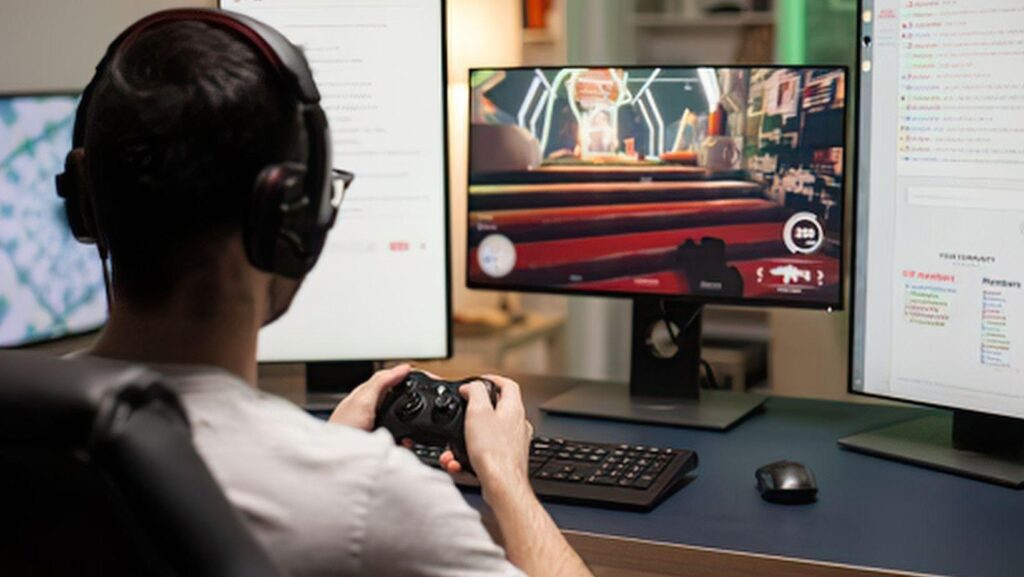
Gaming gets an upgrade from “just for fun” to a real way to generate cash.
Digital distractions are everywhere, fighting to get people’s limited attention, but most people treat gaming as a way to decompress or kill some time while on break or during a commute. It’s common, even habitual. But now, some people are approaching their game time as a side hustle. Now, some aim to make money playing games.
Shifting from Hobby to Generating Income
The global gaming industry is hot, having swelled to a valuation of $184 billion in 2023 alone, according to the International Trade Commission. But what was once a rigid line between professional work and recreational play is becoming increasingly blurred, opening up unexpected paths for those who want to make bank while building their Sims home.
Currently, moving from gaming as a pastime to a source of income is easier, thanks in large part to the accessibility of smartphones, the processing power of modern PCs, and dedicated consoles. The results, though, are seldom random; success often depends on the time invested, strategic planning, and a conscious effort to turn gaming into employment.
Getting Started With Pay-to-Earn Play
There is no “right” way to monetize gaming. Different methods require different temperaments and skill sets:
Pay-to-Earn (P2E) Specific Games
This model often uses blockchain technology to offer players real-world rewards for their participation. Gamers can earn digital assets, such as tokens and NFTs, that hold value within the game’s economy or on certain external marketplaces. It is more often than not closely tied to the world of cryptocurrency.
Competitive Gaming and Esports
Professional gaming has moved far beyond the typical basement stereotype. Tournaments now offer substantial prize pools, but the barrier to getting in can be high. And success in this setting isn’t just about having fun. Much like being an athlete, gaming requires intense practice, coordination, and often high-level teamwork.
Game Testing and Bug Reporting
Game developers frequently need real people to break in their games before they are widely released. Quality assurance testing involves these types of players engaging with unreleased titles to hunt for glitches and report on usage and flaws in exchange for payment. It’s a quieter, more methodical angle for those with a sharp eye for detail.
Streaming and Content Creation
Building a following on platforms like Twitch and YouTube is perhaps the most visible and talked about angle at present. Streaming gameplay, sharing tutorials, and offering colorful commentary can help some creators build huge communities, much like influencers. Income typically comes from advertising, fan support, and brand partnerships.
Mobile Reward Apps and Casual Games
To attract players, many mobile reward apps offer gift cards or small cash incentives for completing basic tasks or hitting specific milestones. For many players just starting in the pay-for-play arena or testing whether this could be their path, this is often the most accessible starting point.
How the P2E Landscape Works
The Play-to-Earn model is often very different from traditional gaming, as it centers on ownership. Players normally control their digital items, which can be traded or sold like digital collectibles. And while these aspects can create new investment opportunities, they also carry risks, since the market can be unpredictable and some games require an initial financial outlay.
Additionally, treating gaming as a job also comes with several distinct trade-offs:
The Upside
A gamer’s work schedule is often flexible, which can be a major advantage for those balancing other commitments. And because the work is inherently entertaining, it can also feel less like a grind than many other, more traditional jobs.
Also, a gamer can diversify their income by combining streaming, testing, and competitive play.
The Downside
Unlike traditional employees, gamers are essentially independent contractors, so their earnings can fluctuate wildly based on factors such as tournament results, follower counts, and even market trends. The gamer must be proficient in treating their work as a business and in handling the small details that come with self-employment: taxes, a disciplined approach to income, balancing real-life commitments, and, specific to the gaming lifestyle, avoiding pitfalls such as scams and unreliable platforms.
How to Grow a Life in Gaming
If the ultimate goal is to treat gaming as serious employment, a strategic mindset is required. The professional gamer should stick to reputable platforms with verifiable payout records and avoid spreading their efforts too thin across too many commitments. It’s usually easier and more effective to master one area, such as becoming a reliable game taster or growing a following on Twitch, than to try every monetization method and hope that one sticks.
It also pays to track progress and treat time spent gaming as a genuine business investment.
Ultimately, finding a balance between the fun of the game and the reality of the lifestyle is most important. Pursuing a passion requires patience and a practical approach.