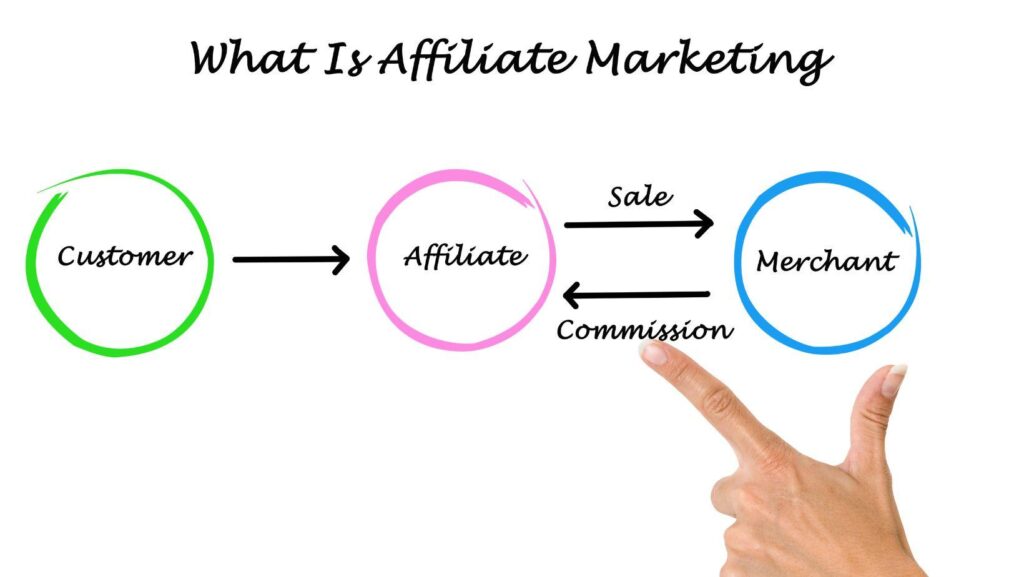
Affiliate marketing is one of the most accessible ways to earn money online. You don’t need your own product, a warehouse, or a large starting budget. You recommend products or services from other companies and earn a commission when someone takes a specific action through your link.
How Affiliate Marketing Works
Every affiliate arrangement involves three parties. The merchant, or advertiser, sells a product. The affiliate promotes it. The customer clicks a tracked link and completes an action. Tracking usually relies on cookies or unique referral IDs, which tell the merchant which affiliate sent the visitor.
Commission structures vary by industry. The most common models are CPA (cost per acquisition), where you earn a fixed fee for each sign-up or purchase. Revenue share gives you a percentage of the revenue a referred customer generates, sometimes for months or years.
|
Commission model |
How you earn |
Main advantage |
Main drawback |
|
CPA (cost per acquisition) |
Fixed fee per sign-up or purchase |
Predictable fee per qualifying conversion |
No earnings from a customer’s future activity |
|
Revenue share |
Percentage of revenue a referred customer generates |
Potential for recurring long-term income |
Earnings can be slow and uneven |
|
Hybrid |
Combination of a fixed fee and revenue share |
Balances upfront and ongoing income |
Terms can be more complex to compare |
|
CPC (cost per click) |
Payment for each qualifying click |
Can monetize traffic without a sale |
Rates and availability vary widely |
A high percentage on a cheap product may earn less than a modest fixed fee on an expensive subscription, so always look at the full picture.
Choosing the Right Affiliate Niche
Your niche determines what you write about, who reads it, and which programs you can join. Beginners often chase the highest-paying categories, yet a niche only works if you can produce useful content consistently.
A good niche balances three factors. There should be real demand, meaning people actively search for information and solutions. There should be products with fair commissions available to promote. Finally, competition should be manageable enough for a new site or channel to gain visibility. Broad topics like “fitness” are crowded, while narrower angles such as home workouts for busy parents give you a clearer audience and a better chance to stand out.
Finding Affiliate Programs Worth Joining as a Newcomer
Once your niche is set, look for programs that match it. Affiliate networks and platforms such as CJ Affiliate, Awin, and Impact give publishers access to many advertisers, while major brands such as Amazon run their own programs. Many brands also run in-house programs, often listed in a website footer under “Affiliates” or “Partners.” Before joining, check the commission rate, cookie duration, payment threshold, payout methods, and promotional restrictions.
Regulated industries deserve extra attention. Online gambling, for example, is a regulated affiliate vertical where advertising rules, age restrictions, licensing requirements, and responsible gambling standards vary by market. If you decide to cover this area, study each operator’s terms and local laws carefully, and review brands such as Ice casino EU with the same balanced approach you would apply to any product you recommend.
Creating High-Converting Affiliate Content
Readers click when content answers their questions and helps them decide. Strong affiliate content usually focuses on solving problems rather than pushing sales. The following formats tend to perform well for beginners:
- Honest product reviews based on real testing or thorough research.
- Comparison articles that weigh two or more options side by side.
- Step-by-step tutorials that naturally include the tools being promoted.
- “Best of” roundups targeting specific needs or budgets.
Traffic can come from search engines, YouTube, social media, or an email list. SEO takes time but delivers steady visitors once your pages rank. Email is especially valuable because you own the list and can reach subscribers directly.
Common Beginner Mistakes
Many new affiliates promote too many unrelated products, which dilutes trust and confuses readers. Others recommend items they know nothing about simply because the commission looks attractive.
Ignoring disclosure is another serious mistake. In the EU, affiliate content must be clearly identifiable as commercial communication, and national rules can add further requirements. Make the relationship obvious to readers and place the disclosure close to the affiliate recommendation or link rather than hiding it in a footer or separate page.
Finally, impatience ends many affiliate projects early. Content often takes months to rank and earn, so tracking results, updating older posts, and improving weak pages matter more than constantly starting over.
Turning a Referral Model Into Steady Long-Term Income
Affiliate marketing rewards consistency, honesty, and a clear focus. Learning how tracking and commission models work helps you choose offers wisely, while a well-defined niche keeps your content relevant to a specific audience. Helpful content, diversified traffic, and transparent disclosures create a stronger foundation for sustainable affiliate revenue over time.