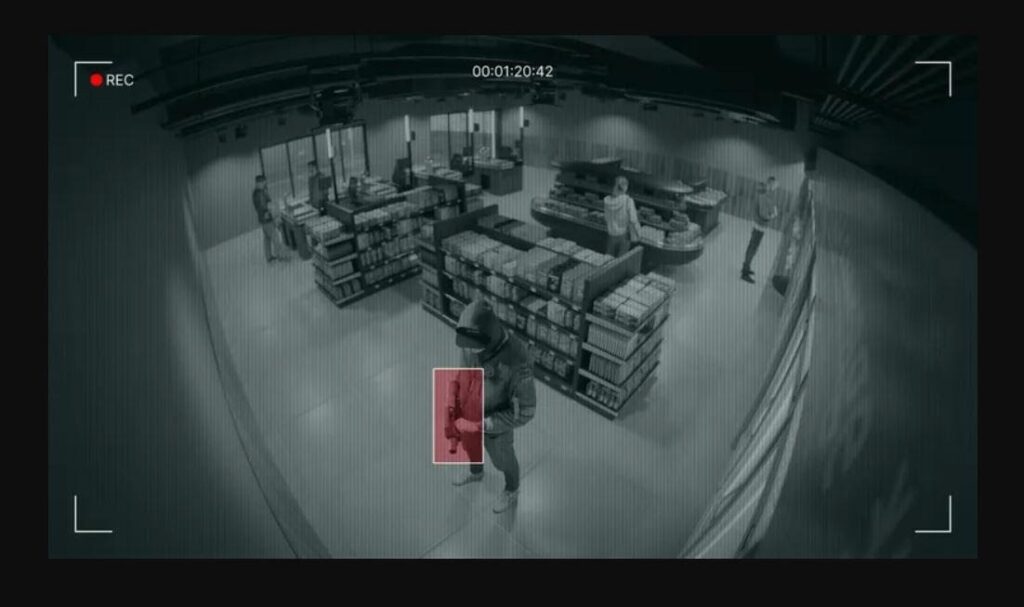
In California, the California Privacy Rights Act (CPRA) reshaped how organizations think about sharing personal information – including video footage. While most compliance discussions focus on databases and consumer profiles, surveillance recordings and operational video archives are increasingly part of vendor evaluations, software pilots, and technical integrations.
Before granting a vendor access to CCTV or recorded video, organizations should pause and ask a critical question: does the supplier truly need identifiable faces and license plates to test the system?
In many cases, the answer is no. Structured redaction before vendor access reduces risk, simplifies contractual controls, and aligns with CPRA’s emphasis on minimization and purpose limitation.
Video Footage as Personal Information Under CPRA
CPRA defines personal information broadly. Identifiable images of individuals – including video recordings – fall within scope when they relate to a consumer or household. In commercial environments such as retail stores, logistics centers, healthcare facilities, and office buildings, surveillance footage frequently captures customers, visitors, employees, and contractors.
When that footage is shared with a service provider for testing, analytics validation, or product evaluation, the organization remains responsible for how the data is handled. Even where a vendor qualifies as a service provider under CPRA, disclosure should remain proportionate to the intended purpose.
Granting access to raw, unredacted archives increases exposure. If identifiable video spreads beyond what is necessary, organizations may face regulatory scrutiny, contractual complications, or reputational damage.
Minimization Before Disclosure
One of the most practical compliance controls is to minimize identifiability before any external transfer. In video workflows, this typically means blurring faces and license plates unless the vendor specifically requires identification for a defined function.
For example:
- If the supplier is testing video playback performance, faces are irrelevant.
- If the evaluation concerns motion detection or object tracking, identity is unnecessary.
- If the pilot focuses on infrastructure compatibility, anonymized clips are sufficient.
By redacting primary identifiers before sharing, organizations can often avoid transferring personal information entirely – or at least significantly reduce its sensitivity.
Why On-Premise Redaction Matters
Vendor evaluations frequently involve sensitive environments: security incidents, workplace injuries, customer interactions, or internal operations. Uploading raw footage to external tools for redaction introduces an additional data transfer that may itself require contractual and security review.
On-premise redaction allows organizations to anonymize footage before any external disclosure. This approach keeps raw recordings within the organization’s infrastructure and limits outbound data flows.
For teams handling recorded surveillance material, a local file-based workflow is often easier to control than a cloud relay model. Gallio PRO fits that use case by focusing on stored photos and video files, with automatic blurring limited to faces and vehicle license plates. A practical overview of that workflow is available here: https://gallio.pro/anonymize-video/.
That narrower scope matters in vendor-sharing scenarios. Gallio PRO does not anonymize full body silhouettes, and it does not perform real-time or live-stream anonymization. Instead of trying to cover every possible visual element automatically, it keeps the core workflow predictable: direct identifiers such as faces and plates are handled at scale, while contextual review remains part of the process.
Other elements – such as company logos, tattoos, name badges, documents, or content displayed on monitors – are not detected automatically, but they can be masked manually using the built-in editor. This structure supports vendor-sharing workflows well: automation handles the majority of identifiable frames, while manual review addresses contextual risks that depend on scene content and the purpose of disclosure.
Gallio PRO does not collect logs containing face or license plate detection data and does not store logs containing personal or sensitive information. For organizations conducting internal compliance reviews, reducing detection metadata can simplify governance assessments and lower secondary exposure risk.
If your team is evaluating vendor pilots involving surveillance footage, it is worth testing the workflow locally on representative clips and checking how anonymized exports perform before any data leaves your environment.
Service Provider vs. Third Party: Why the Distinction Is Not Enough
Under CPRA, the distinction between a service provider and a third party affects contractual obligations and downstream restrictions. However, even when a vendor qualifies as a service provider, the principle of purpose limitation remains central.
Providing more identifiable data than necessary increases risk regardless of contractual labels. If a vendor only needs to test video rendering, providing blurred footage is operationally sufficient and legally safer.
Redaction before disclosure also reduces complications if the pilot ends unsuccessfully. Organizations avoid lingering copies of raw, identifiable footage in external environments.
Operational Advantages Beyond Compliance
Structured pre-disclosure redaction is not merely a regulatory safeguard. It also offers operational benefits:
- Simplifies vendor security questionnaires
- Reduces negotiation friction in data processing agreements
- Limits exposure if the vendor experiences a security incident
- Supports a documented privacy-by-design narrative
In high-visibility industries – retail chains, healthcare providers, transit authorities, and logistics networks – vendor data handling is often scrutinized by regulators, auditors, and insurers. Minimization before sharing demonstrates responsible data governance.
Consistency Across Departments
Vendor access to video can originate from multiple departments: IT, security, marketing, operations, or legal. Without a standardized redaction workflow, practices may vary – increasing the chance that raw footage is shared without review.
Implementing a default rule – blur faces and license plates before external access unless explicitly required otherwise – creates consistency across the organization. Combined with documented review procedures, this approach reduces ad hoc decision-making.
Quality Assurance Before Transfer
Before releasing anonymized footage to a supplier, teams should confirm that blurring remains stable across the full timeline. Lighting changes, motion, and occlusions can create temporary exposure if not reviewed.
Testing anonymized exports internally ensures that what the vendor receives does not inadvertently reveal identities. If revisions are required, they can be made quickly within the organization’s environment rather than after data has been shared.
Balancing Innovation and Privacy
Technology pilots and vendor evaluations are essential for operational growth. CPRA does not prevent organizations from innovating – but it does require thoughtful handling of personal information.
By anonymizing surveillance footage before vendor access, companies reduce regulatory exposure, protect customer and employee privacy, and streamline compliance oversight.
Before granting external access to video archives, consider whether identification is truly necessary. In many cases, it is not. Redaction first – disclosure second – creates a safer and more defensible workflow.
FAQ – CPRA and Vendor Video Sharing
Does CPRA apply to video footage?
Yes. Identifiable video recordings can constitute personal information under CPRA.
Is redaction required before sharing with a service provider?
Not universally required, but minimization is strongly recommended when identification is not necessary for the vendor’s purpose.
Can anonymized footage fall outside CPRA scope?
If properly anonymized so individuals are no longer identifiable, the data may fall outside CPRA’s definition of personal information.
Does Gallio PRO provide live-stream anonymization?
No. Gallio PRO processes stored photos and pre-recorded video files and automatically blurs faces and license plates, with manual tools for additional elements.