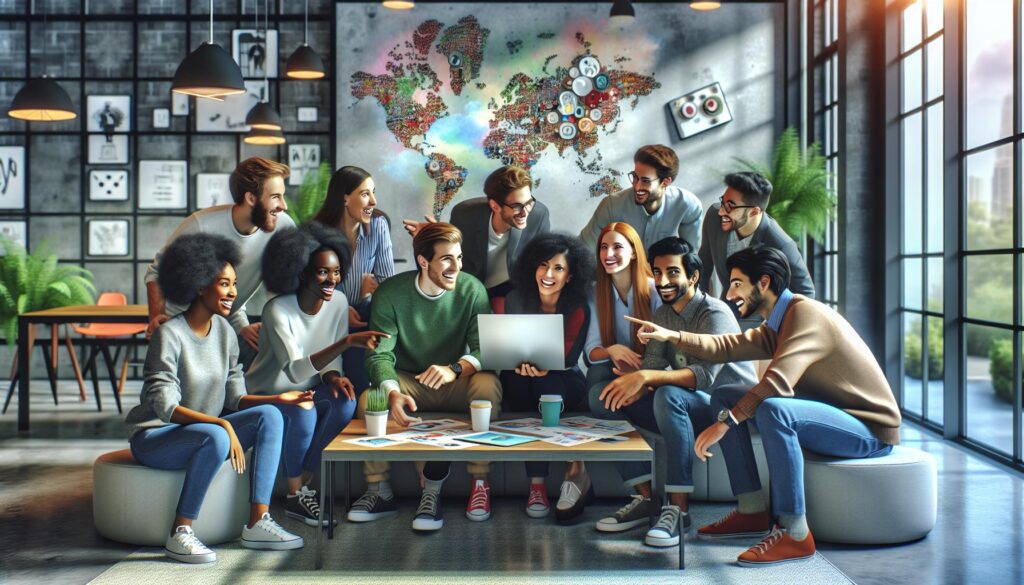
Something interesting has been happening across the creator world lately — almost quietly, but you can feel it if you pay attention. For years, online content was dominated by solo voices. One creator. One camera. One perspective trying to do everything at once.
But the landscape is shifting. Fast.
Duos are rising — pairs of friends, romantic partners, roommates, siblings, colleagues, even unexpected creative matches that somehow click. And audiences aren’t just accepting this shift; they’re leaning into it. There’s a certain spark that appears when two people co-create. More spontaneity. More chemistry. More humanity, honestly.
Co-creation isn’t just a cute trend — it’s becoming a high-growth strategy. The internet simply rewards dynamic content, especially content with multiple voices interacting in real time. Maybe because it feels more alive. Maybe because relationships — even tiny on-camera ones — pull us in.
Whatever the reason, digital duos are here, and they’re changing what online storytelling looks like.
Why Collaboration Outperforms Solo Creation
Most creators don’t burn out because they lack ideas. They burn out because they’re doing every job at once. Editing, writing, filming, planning, engaging — all on their own. No wonder the workflow feels like a marathon with no finish line.
Collaboration flips that.
In a duo, strengths naturally complement each other. One person’s “weakness” is often the other’s favorite part of the process. You might get someone who’s brilliant at editing paired with someone who shines during brainstorming. Or a storyteller matched with a performer. When both people are allowed to lean into what they do best, the whole creative engine gets smoother.
And honestly? It’s just easier to produce more when there are two brains and four hands involved. Not perfect, sure — but human.
Then there’s the on-camera chemistry. That intangible thing you can’t fake. Friends teasing each other, couples debating ideas, partners finishing each other’s sentences — those moments add a layer of storytelling that single-creator content can’t replicate. Audiences love these small, authentic exchanges. They make people feel like they’re watching a relationship unfold, not a script.
And deeper connection leads to deeper engagement. Simple, but true.
The Rise of Digital Duos Across Platforms
You can see the trend everywhere once you start looking.
On YouTube, duos run talk shows, travel diaries, reaction series, comedy sketches, niche commentary channels — you name it. Many podcast formats depend entirely on the chemistry between two hosts. In gaming and streaming, co-streams often outperform solo runs because viewers enjoy the shifting perspectives and the “you had to be there” moments that only happen between two people.
Short-form platforms like TikTok and Reels turned duos into mini storytellers. Fast cuts, quick banter, two-person skits, side-by-side reactions — it’s almost the perfect environment for collaboration. Viewers get variety without changing creators. And duos get to experiment constantly with formats that wouldn’t work as well solo.
The pattern is pretty clear: one perspective is fine. Two are better. And sometimes wildly better.
It’s not just creativity — it’s scalability. Two minds don’t just double possibilities; they multiply them.
What Makes Collaborative Content So Engaging?
I’ve always believed people don’t fall in love with content — they fall in love with the people making it. And duos naturally offer two characters, two arcs, two emotional anchors.
A few things make duo-based content unusually sticky:
- Real-time reactions. When two creators interact, the audience gets both the event and the reaction to the event. That duality creates layers.
- Authenticity through conversation. People open up differently when they’re talking to someone they trust. Viewers can feel it. The conversations feel less rehearsed and more like “we happened to overhear this.”
- Tension and balance. Not dramatic tension — just natural differences in tone, humor, or opinion. Those small contrasts keep things interesting.
Creators who want to study how partnerships — especially couple-based digital duos — grow often look at resources like https://onlymonster.ai/blog/onlyfans-couples/ to understand how shared content models work and what fuels joint audience engagement.
Sometimes one tiny pattern you spot in someone else’s workflow can reshape your own.
Building a Successful Creative Partnership
Of course, none of this works magically. A duo is still a relationship — which means there are expectations, boundaries, preferences, and, let’s be honest, occasional friction.
The strongest digital duos usually:
- Align on goals from the start.Is the partnership for fun? Growth? Branding? Income? It sounds obvious, but many collaborations fall apart because the two people wanted different things.
- Define roles. Not rigid roles — just clarity. Who edits? Who handles communication? Who manages the shoot schedule? Without this, small tasks turn into arguments.
- Share calendars, pipelines, and tools. A two-person workflow collapses quickly if it lives in pure improvisation. A simple shared notes app or board can save a lot of headaches.
- Keep individuality alive. Some of the best duos work because both partners still feel like distinct characters. Not clones. Not merged identities. Just two humans building one brand without losing themselves.
Honestly, I’ve seen more than one partnership fall apart simply because they forgot to talk like real people, not “business partners.” Communication matters. Probably more than anything.
Tools and Systems That Support Digital Duos
If solo creators rely on tools, duos depend on them even more — mostly to avoid stepping on each other’s toes.
A few essentials:
- Collaboration apps. Shared planning tools, content calendars, messaging platforms. Even something as simple as a shared folder can make a huge difference.
- Shared drives and asset libraries. When two people edit the same footage, version control becomes a lifeline. Nobody wants to overwrite each other’s work at 2 a.m.
- AI tools for multi-person workflows. AI transcribers, caption generators, editing assistants, research tools — they save hours. And the saved hours reduce friction.
Without these systems, even the strongest duo ends up spending more time organizing than creating. With them, things flow. Not perfectly — but well enough to stay sane.
The Future of Collaborative Content Creation
If current trends are any hint, we’re only at the beginning of this duo-driven wave.
Expect to see:
- more creator couples and best-friend duos
- more co-streaming and dual-POV formats
- more brand deals built specifically for partnerships
- more creators forming small two-person “studios”
As content creation becomes more competitive, collaboration won’t just be an advantage. It’ll be a long-term edge — the kind that compounds.

Because honestly, two people brainstorming together can see things one person never will.
And maybe that’s the quiet secret behind all of this: creativity expands when shared.
Conclusion
Collaborative creation isn’t just reshaping the content ecosystem — it’s reshaping how creators survive in it. Digital duos bring more authenticity, more chemistry, and more consistency than most solo creators can sustain alone.
Partnerships make the work lighter. Stories richer. Audiences are more connected.
And the duos who build trust, strong systems, and real chemistry? They’re not just succeeding in today’s creator landscape.
They’re defining the next era of digital media.
Because at the end of the day, content isn’t just about ideas — it’s about people. And two people, creating together, can spark something one person simply can’t.