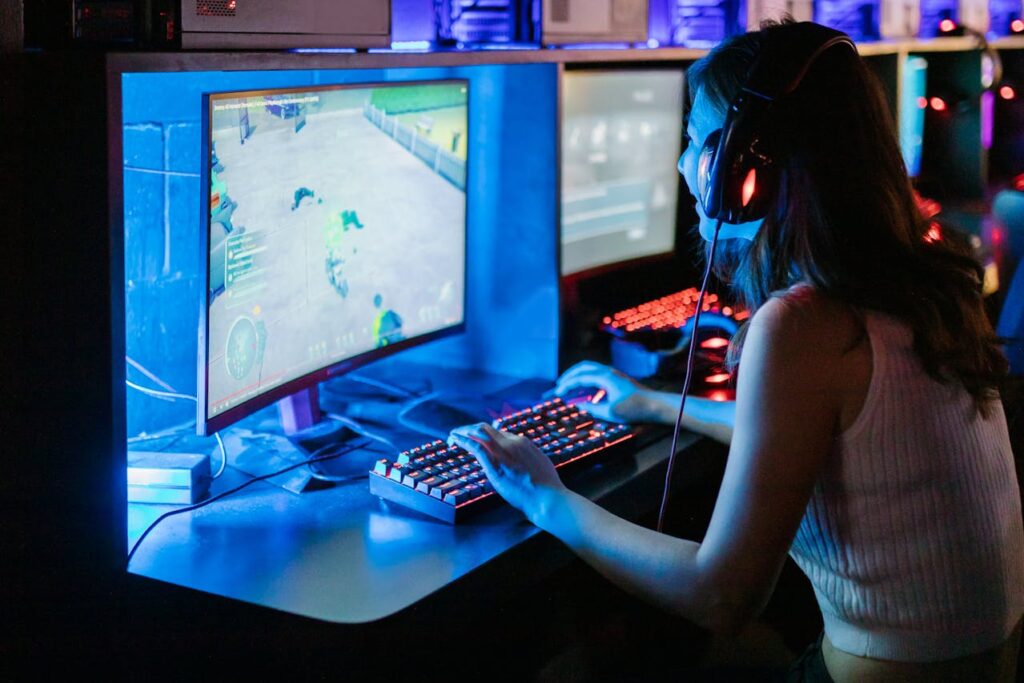
Remember when games were predictable? You’d memorize a pattern, hit the buttons at the right time, and win. It was a test of muscle memory. But lately, things have changed. Whether you’re opening a digital chest or wandering through a forest that didn’t exist five minutes ago, unpredictability has moved from a niche mechanic to the very heartbeat of modern entertainment. We’ve collectively accepted that we aren’t always in control, and weirdly enough, we seem to love it.
The Psychology of the Roll
Why do we keep coming back to systems that might give us nothing? It’s all in the brain. Psychologists have known for decades that a “variable ratio schedule”—basically, getting a reward at unpredictable intervals—is way more addictive than getting one every single time. If you knew exactly when you’d win, you’d probably get bored and do something else.
Randomness is now a common feature across games, from loot drops to procedural generation. Look at something like Fishin Frenzy; it leans into that exact tension where you never quite know what’s trailing the hook, and it didn’t take long for the rest of the industry to realize how well that uncertainty keeps people engaged. It creates this “just one more go” loop that’s hard to break. You aren’t just playing for the prize; you’re playing for the feeling of the reveal. It’s that split second where the outcome is still a mystery that provides the real dopamine hit.
More Than Just a Roll of the Dice
It isn’t just about winning or losing gear, though. Randomness has fundamentally changed how stories are told. In the past, a game was a straight line. Now, it’s often a messy, sprawling web. Think about “roguelikes.” You start a run, the map is scrambled, the items you find are totally different from your last attempt, and suddenly a game you’ve played for fifty hours feels brand new.
Is it frustrating when the luck of the draw goes against you? Absolutely. We’ve all had those moments where a near-guaranteed success somehow fails three times in a row. But let’s be honest: without the risk of falling flat on your face, victory wouldn’t feel like much of an achievement. It would just be an interactive movie. We need that bit of friction to make the win mean something.

Why We Won’t Go Back
The trend of leaning into random outcomes is here to stay because it solves a massive problem: players are just too fast. We “solve” games at record speeds, finding the shortcuts and the best gear within days of a release. By baking randomness into the core, developers ensure that no two players have the exact same story to tell.
It’s a clever way to stop a world from feeling stale. If things shift every time you log in, the game stays alive much longer than a scripted experience ever could. It’s a bit of a gamble for the creators, too—they have to hope the math works out so the game stays fair—but when it hits the mark, it’s magic.
What do you think? Are we relying too much on luck these days, or does the unpredictability make the experience more “real”? Drop a comment below and let’s talk about your best (or worst) brush with randomness.