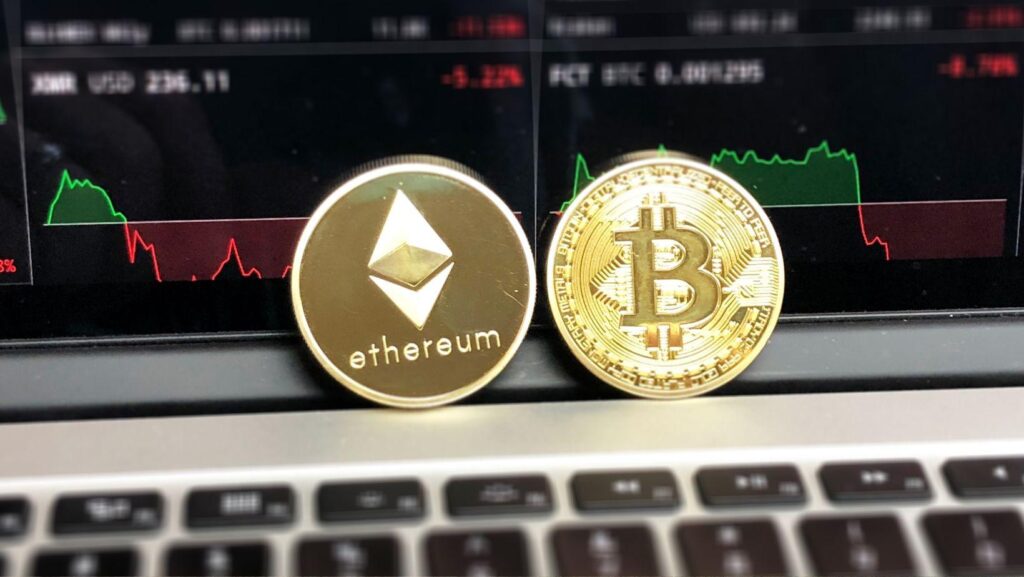
The Fed holds its next meeting on September 15-16, and for once the market genuinely doesn’t know what’s coming; pricing has swung between a hold and an outright hike, which is an unusual place to be after a cutting cycle. That uncertainty ripples further than the headline number. Bitcoin and Ethereum feel it first and hardest, but smaller, more liquidity-sensitive corners of the market — a category that includes most gaming tokens — tend to move by a larger multiple in either direction once the dust settles.
Here’s the part most explainers skip: the federal funds rate itself is almost never the actual mechanism. It’s a signal that gets read, priced in ahead of time, and then mostly ignored on the day it’s confirmed. What actually moves crypto is the liquidity behind that number — how much money is sloshing through the system, not what the headline rate says on a press release.
What the Fed has actually done, not just said
The Fed cut rates three times in 2025, bringing the federal funds rate down 0.75 percentage points to a 3.5%–3.75% range, the lowest level in more than three years, before holding steady through two consecutive meetings in early 2026. Jerome Powell described the shift into a “wait and see” phase, and the Fed’s own projections point to only one more cut in 2026. Separately, and more quietly, the Fed ended its quantitative tightening program and resumed adding liquidity, buying roughly $40 billion a month in Treasury bills plus another $15 billion in reinvested mortgage-backed securities. That second detail rarely makes a headline, and it’s arguably the bigger lever.
The rate isn’t the mechanism, liquidity is
|
What gets the headline |
What actually moves markets |
|
The federal funds rate itself |
Total dollar liquidity flowing through the system |
|
A rate cut announcement |
Whether the cut matched or beat what was already priced in |
|
FOMC meeting day volatility |
The weeks of positioning before and after |
|
“Rates are high, so risk assets fall” |
How much of that high-rate scenario was already expected |
A 2024 academic study out of Kingston University London, examining the relationship between dollar monetary liquidity and Bitcoin, found that liquidity conditions have a measurable, significant effect on price — and that in the years following the pandemic, liquidity alone accounted for more than 65% of Bitcoin’s price movement. That’s a striking number. It also means roughly a third of the movement comes from somewhere else entirely: regulatory news, exchange flows, halving cycles, and the kind of idiosyncratic crypto-specific events that have nothing to do with the Fed.
Where this decouples, and where it doesn’t
There’s a real counter-argument worth taking seriously here, not just a caveat. Some analysts point to Bitcoin ETF demand now projected to absorb more than the entire annual output of newly mined Bitcoin in 2026, alongside long-term holder supply sitting at multi-year highs through every drawdown since January. Flows like that come from pension allocations and corporate treasury decisions made on quarterly timelines, not from reactions to a single Wednesday press conference. If that thesis holds, a Fed decision becomes less of a trigger and more of a confirmation of a trend already in motion.
Who this actually matters for
Short-term traders positioned around FOMC days still need to watch the calendar closely, since the volatility around a surprise, in either direction, is where the fastest money gets made or lost. Long-term holders accumulating through an ETF or a treasury allocation can reasonably discount most single-meeting noise, since the structural liquidity trend matters more than any one data point along the way. And for anyone in smaller, higher-beta sectors, the honest caveat is that those tokens amplify whatever direction the majors move, which means the same Fed decision that barely dents Bitcoin can hit a thinly traded altcoin sector several times harder, for better or worse, depending on which side of the surprise the market lands on.