
Modern engineering is evolving at a pace that challenges traditional methods of measurement and analysis. Projects are becoming more complex, with structures and systems that demand exacting standards for safety, quality, and efficiency. Relying solely on conventional surveying tools can make it difficult to keep up with these demands, often slowing progress and increasing the risk of costly mistakes.
3D laser scanning offers a new perspective, capturing environments and components in ways that were previously impractical or impossible. This shift is influencing not just how engineers collect data, but how they approach problem-solving and planning across disciplines.
Read on to explore how 3D laser scanning is reshaping the foundations of modern engineering.
Introduction to 3D Laser Scanning in Engineering
Accurate measurements are crucial in engineering. Traditional methods can be slow and prone to error. 3D laser scanning provides a precise way to capture the shape and dimensions of objects and environments. Engineers can rely on this technology to create dependable digital references.
Many teams work with a company that provides 3D scanning services, gaining access to professional expertise and advanced 3D laser scanners. This allows them to focus on interpreting the results rather than handling the technical challenges of scanning.
For a clear overview, the following are the aspects that make 3D scanning essential for engineering projects:
- Non-contact measurement: Scans capture surfaces without any physical contact, eliminating the risk of scratching, bending, or otherwise altering delicate or complex objects. This ensures that even fragile components are measured accurately and safely, making it ideal for intricate engineering projects where precision is critical.
- High precision: Measurements can reach sub-millimeter accuracy, producing detailed point cloud data that forms the foundation for precise analysis and design. This level of detail allows engineers to detect subtle variations, verify dimensions, and make informed decisions that improve overall project quality.
- Rapid data capture: Large structures or intricate components can be scanned in a fraction of the time required by traditional methods. The resulting digital representation provides a complete and accurate snapshot of the object or environment, enabling faster planning, modeling, and review without compromising accuracy.
These features give engineers a dependable foundation for planning, analysis, and decision-making, ensuring accurate and confident outcomes.
Improving Design Accuracy and Efficiency
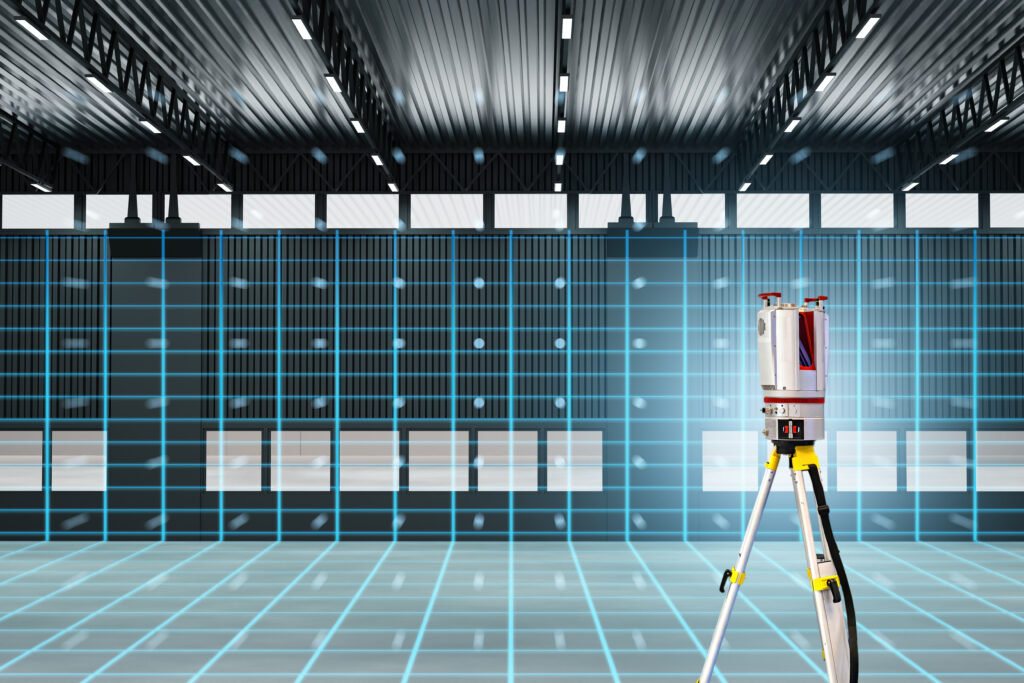
Accurate and detailed information is critical when designing modern infrastructure. 3D laser scanning provides the foundation for integrating real-world data into digital models, which improves design accuracy and efficiency. Companies that adopt this technology can refine their business model, leveraging faster design cycles and reduced errors to deliver projects more efficiently and cost-effectively.
To understand its benefits, the following are the top aspects engineers gain from using this technology:
- Error reduction: Using point cloud data allows engineers to detect inconsistencies, misalignments, or design clashes early in the process. This minimizes the need for rework and ensures that adjustments can be made before construction begins.
- Streamlined modeling: The captured 3D models and CAD models can be directly incorporated into design software, such as BIM platforms, enabling engineers to create highly accurate representations of structures. This integration speeds up the modeling process and reduces manual input errors.
- Better collaboration: Detailed BIM models and CAD drawings allow teams in different locations to review and coordinate designs simultaneously. This improves communication, ensures everyone works from the same accurate data, and helps maintain consistency across all design stages.
These capabilities provide engineers with confidence that designs are accurate, feasible, and well-coordinated.
Enhancing Construction and Project Management
Construction projects require continuous oversight to ensure designs are implemented accurately. 3D laser scanning provides real-time insights that allow project managers to monitor progress closely and maintain quality standards. With precise measurements, teams can verify that each element aligns with the design specifications, reducing the risk of costly mistakes.
In addition, frequent scans enable efficient data capture across the site, allowing managers to track milestones and document work completed. This information supports better planning and scheduling, helping teams anticipate potential delays before they escalate. Integrating these scans ensures that updates are based on actual conditions rather than estimates.
Furthermore, reality capture facilitates early identification of potential conflicts between structural, electrical, or plumbing systems. Combined with clash detection, engineers can resolve issues digitally before construction proceeds, minimizing disruptions and rework.
Facilitating Maintenance, Inspection, and Retrofits
Maintaining infrastructure over time requires precise and up-to-date information. 3D laser scanning delivers accurate measurements that help engineers track changes in structures, capturing point cloud data that highlights wear, deformation, or misalignments before they become serious problems. This information forms a reliable baseline for ongoing assessment.
Additionally, retrofit and renovation projects benefit from detailed digital records. Through reality capture, engineers can generate accurate models of existing spaces, allowing upgrades or expansions to be planned with minimal guesswork. These models reduce errors, accelerate decision-making, and ensure new elements integrate smoothly with existing structures.
Moreover, digital tools enhance operational oversight and safety. Using scan data to create digital twins supports efficient facility management, enabling virtual inspections, maintenance scheduling, and compliance checks.
Final Thoughts
3D laser scanning is revolutionizing engineering by delivering unmatched accuracy, efficiency, and versatility. From improving design workflows to enhancing construction management and supporting long-term maintenance, it empowers engineers to work smarter and make better decisions. As technology continues to advance, its adoption will likely become standard practice, reshaping the way engineering projects are conceived, executed, and maintained.