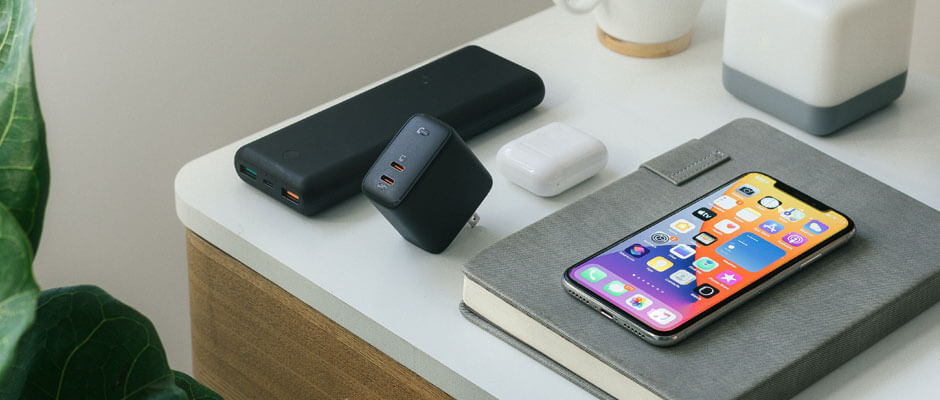
Tap a button, approve the charge in your banking app, and the money is gone before you have put your phone down. To a player it feels like nothing, a single gesture. Under that gesture sits a surprising amount of plumbing: identity checks, consent tokens, bank connectors, and a settlement clock that is counting in seconds. Nordic gambling sites have quietly become one of the busiest real-world testbeds for this kind of instant bank payment, and the way the pieces fit together is a genuinely interesting engineering problem.
This piece is written for readers who like knowing how the machine works, not just that it does. We will trace what happens between the tap and the confirmation screen, look at where providers like Zimpler and Brite sit in the stack, and explain why the whole thing has to finish in the time it takes to read this sentence. If you want to see how these payment-first sites are compared in practice, Finnish players often start with a guide such as viljo kasinot, which lines up operators by deposit method and payout speed rather than by welcome offer.
A quick disclaimer before the deep-dive: none of this is gambling advice, and the market details below are hedged on purpose because Finland’s rules are still shifting. Play is 18+, and if it stops being fun, Finland’s Peluuri service and self-exclusion tools exist for a reason. With that out of the way, let us open the hood.
What one tap actually sets in motion
When you choose “pay by bank” at a checkout, you are not sending money the way a card does. A card payment pulls funds through the card networks using a stored number and an expiry date. A one-tap bank payment does the opposite: it asks your bank to push money directly from your account to the merchant, with you approving the push in real time.
That single tap fans out into a short sequence. The site hands you off to a payment provider. The provider asks which bank you use. Your bank confirms who you are. You approve a specific amount to a specific recipient. The bank then initiates the transfer and reports back whether it went through. Each of those steps is a separate network call, often to a separate system, and the user sees none of the joins.
The reason this pattern exists at all in Europe is regulatory. A directive known as PSD2 forced banks to open programmable access to accounts, which turned “let an app move my money” from a private banking deal into a standardized capability. That is the foundation everything else is built on.
The open banking layer that makes it possible
At the center of the stack is a role called a payment initiation service provider, usually shortened to PISP. A PISP is a regulated company that is allowed, with your consent, to tell your bank to start a payment on your behalf. It never holds your money and it does not need your card. It holds permission.
PSD2 came into force across the EU in 2018 and created this category on purpose. Before it, if a company wanted to move money out of your account, it went through cards or clunky manual transfers. After it, a licensed third party could connect to your bank through a defined interface and initiate a payment directly, provided you authorized that exact transaction. Supervisory authorities license and monitor these providers, which is why a legitimate one is traceable back to a named regulator rather than operating in the dark.
For an engineer, the useful mental model is that the PISP is a broker sitting between many merchants on one side and many banks on the other. It normalizes a messy reality (hundreds of banks, each with its own connection quirks) into one clean integration that a casino or any other merchant can call.
Strong customer authentication and the security model
The part that makes people nervous, letting an app move money from your bank, is also the part with the strictest rules. PSD2 mandates strong customer authentication, or SCA, for online payments. In practice that means proving who you are with at least two independent factors drawn from three categories: something you know, such as a PIN; something you have, such as your phone; and something you are, such as a fingerprint or face scan.
This is why the flow bounces you into your own banking app to approve the payment. The approval is not happening on the casino’s page, and it is not the casino checking your identity. Your bank is doing it, using credentials the merchant never sees. The merchant learns only that authentication succeeded, never how.
That separation is a solid security design, but it is not a reason to switch off your own habits. Reusing passwords, skipping device updates, or ignoring app permissions can undermine even a well-built payment flow, and the human layer is usually the weakest one. TurboGeek’s rundown of 7 everyday cybersecurity mistakes that quietly put you at risk is a good sanity check on the basics before you hand any app the keys to a bank connection.
Where Zimpler, Brite, and the PISPs sit in the stack
Two names come up constantly in the Nordic market: Zimpler and Brite. Both are payment providers that specialize in account-to-account bank payments rather than cards, and both are built around the open banking model described above.
Zimpler, for example, is licensed and supervised by Finansinspektionen, Sweden’s financial supervisory authority, and its stated approach is to initiate account-to-account payments through open banking connections while layering identity, anti-money-laundering, and monitoring checks on top. Brite operates in the same account-to-account space, connecting a user’s bank directly to a merchant for both deposits and, where supported, payouts.
From a systems perspective, these providers are the concrete implementation of the PISP role. They maintain the bank connectors, keep them working as banks change their interfaces, handle the authentication handoff, and expose a single API to the merchant. A casino integrates one provider and inherits access to a large set of banks, which is exactly the kind of abstraction engineers like: one dependency, broad reach.
Pay-n-play: no-account onboarding as an engineering pattern
The most Nordic twist on all this is the “pay-n-play” or no-account casino. The idea is that you do not fill in a registration form at all. You make your first deposit by bank, and the identity your bank already verified becomes your account. Play, then withdraw back to the same verified bank account.
This is a neat piece of engineering because it collapses two flows that are usually separate: know-your-customer onboarding and the first payment. The bank authentication that clears your deposit also supplies the verified identity the operator needs, so there is no second signup step to abandon. Fewer forms means fewer drop-offs, and the verified-bank requirement makes it harder to open throwaway accounts.
The tradeoff is that the whole experience now leans entirely on the payment provider and the bank connection. If that link is slow or flaky, there is no fallback signup path to fall back on. So the reliability of the payment layer stops being a nice-to-have and becomes the product itself.
Account-to-account versus card rails
The table below compares the two payment models on the dimensions that actually matter to the person building or choosing the flow. Treat the timings as typical rather than guaranteed, since real numbers depend on the bank, the provider, and the time of day.
|
Dimension |
Account-to-account (pay by bank) |
Card rails |
|
How money moves |
Bank pushes funds directly to merchant |
Funds pulled via card networks |
|
What the user enters |
Bank login and in-app approval |
Card number, expiry, security code |
|
Identity check |
Bank-run SCA, reused for onboarding |
Issuer risk checks, often 3-D Secure |
|
Typical deposit feel |
Near-instant after approval |
Near-instant |
|
Payout speed |
Can be fast where instant rails are used |
Often slower, subject to card refunds |
|
Data the merchant sees |
No card credentials, just a result |
Card details, tokenized or stored |
|
Main dependency |
Open banking connection and provider |
Card network and issuer |
The short version: card rails are familiar and universal, while account-to-account trims out the card, keeps sensitive credentials inside the bank, and can settle both directions quickly when instant payment rails are available.
The tax-free question for Finnish players
There is a second reason Finnish players gravitate toward these payment-first sites, and it is not really about engineering: it is about tax. As a general rule, gambling winnings from operators licensed within the European Economic Area are treated as tax-free for Finnish residents, while winnings from operators outside the EEA can be taxable. This is why the licensing location of an operator, not just its payment method, matters to players.
Keep the hedge in mind here. Tax treatment depends on individual circumstances and can change, the EEA-licensed distinction is the general principle rather than a personal guarantee, and none of this should be read as tax advice. Comparison sites frame themselves as guides to where operators are licensed and how they pay, not as a promise about anyone’s tax return. The safe takeaway is that instant bank payments and the tax-free question are two separate features that happen to appeal to the same audience.
Building for a ten-second settlement window
Here is where the engineering gets genuinely tight. The instant rails that make fast bank payouts possible in the euro area are built to a real-time standard. The European Payments Council’s SEPA Instant Credit Transfer scheme targets a processing time of about ten seconds, running 24 hours a day, every day of the year, rather than only during banking hours.
Ten seconds, all the way from initiation to a confirmed credit, is a hard budget to design against. Inside that window the provider has to resolve which bank you use, complete the authentication handoff, initiate the transfer, and get a definitive success or failure back. There is no room to poll lazily or to leave the user staring at a spinner. Systems in this space tend to be built around asynchronous callbacks, idempotent requests so a retry never double-charges, and clear timeout handling so a slow bank produces an honest “try again” rather than an ambiguous limbo.
For a no-account casino, that latency budget is the entire user experience. The difference between a payout that lands in seconds and one that stalls is the difference between a player who trusts the site and one who does not, which is why the payment layer gets a disproportionate share of the engineering attention.
What a licensed Finnish market could change
Finland is expected to move away from the long-standing Veikkaus monopoly and toward a licensed multi-operator market, with the change widely discussed for roughly 2026 to 2027. That timing is not fixed, so treat any specific date as a moving target rather than a fact.
If and as that market opens, the practical effect for the payment stack could be significant. A licensed domestic framework tends to bring clearer rules on operator conduct, player protection, and possibly on how payments and identity are handled. It would not change the underlying open banking plumbing, since that is European and already in place, but it could change which operators can serve Finnish players openly and under what supervision. For now, the sensible framing is that the plumbing is stable and the regulatory layer above it is still being drawn.
Frequently Asked Questions
Is a one-tap bank payment actually safer than using a card?
It moves the risk around rather than removing it. Your card number is never handed to the merchant, and your bank runs the identity check using credentials the site never sees, which closes off some common card-fraud paths. That said, the security depends on your own bank login staying protected, so device hygiene and unique passwords still matter.
Do Zimpler and Brite hold my money at any point?
In the account-to-account model they act as initiators, not custodians of your balance. They tell your bank to push a payment that you have approved, and the funds move from your account toward the merchant. The exact handling can vary by product and country, so the specifics for any single transaction come down to that provider’s setup and your bank.
How can a no-account casino verify me without a signup form?
It reuses the identity your bank already confirmed. Because your first deposit runs through a bank that performed strong customer authentication, the operator can treat that verified bank relationship as the account instead of asking you to fill in a separate registration. The verified-bank requirement is also what makes throwaway accounts harder to create.
Why do these payments have to complete so quickly?
The instant euro payment rails are built to a real-time target measured in seconds, and they run around the clock. For a pay-n-play site the payment is the product, so a deposit or payout that stalls directly damages trust. Engineers design for that window with asynchronous callbacks, retry-safe requests, and strict timeouts.
Are my winnings from these sites tax-free in Finland?
As a general principle, winnings from operators licensed within the European Economic Area are treated as tax-free for Finnish residents, while winnings from operators outside the EEA can be taxable. This depends on individual circumstances and current rules, it is not personal tax advice, and it is separate from which payment method you used.