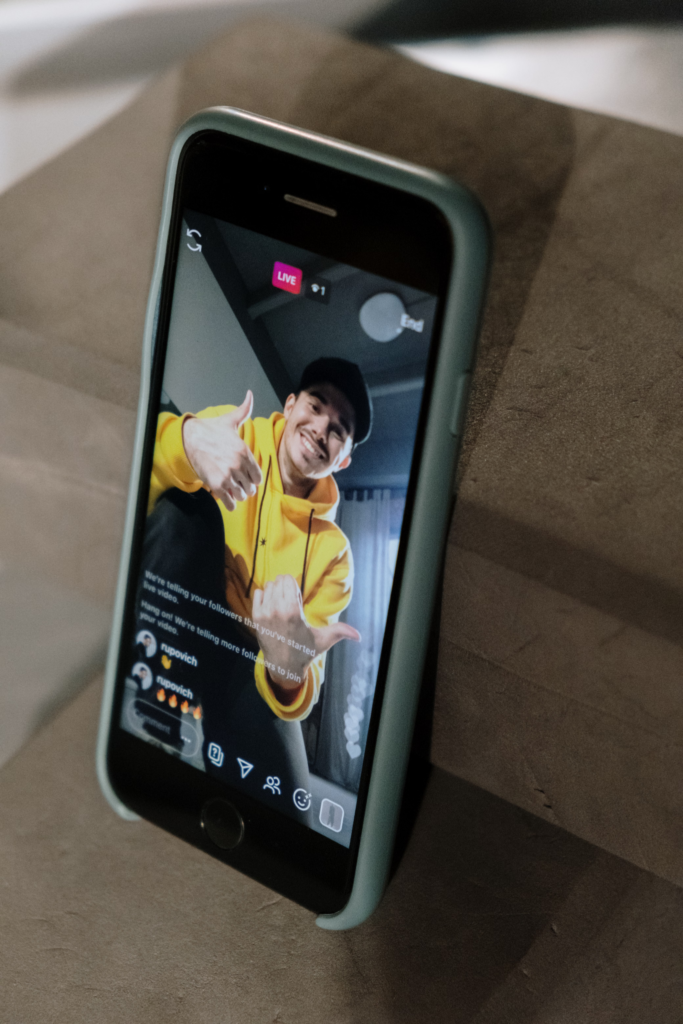
You don’t really think about latency in live video until you realize you’re watching the past a few seconds too late. You can be sitting on your sofa watching the same football match as someone across town, yet your friend might celebrate a goal several seconds before it appears on your screen. You hear them shouting, check your phone, and only then see the ball hit the net.
Well, of course, such a delay may not matter much for ordinary broadcasts. But when viewers are following an event where every second counts, even a small delay can make the experience feel disconnected. That’s why low-latency live streaming technology is becoming increasingly important. And, thankfully, streaming services are aware of this shift and are working hard to adjust.
Amazon Web Services, for instance, describes low latency as delivery in under five seconds through Amazon Interactive Video Service, while its real-time streaming technology can bring host-to-viewer latency below 300 milliseconds. But how does all of this actually happen?
Well, the answer is obviously more complicated than simply sending a video signal faster. Every live stream passes through several stages, and each one can introduce a little delay. That’s where low-latency technology comes into play, reducing the amount of time spent at each stage without making the viewing experience unstable.
It starts with capturing and encoding the video
Take an industry like iGaming, for instance. Before you access your favorite live casino game, there is already a surprisingly long technical journey happening behind the scenes. A camera may be pointed at a roulette table or a blackjack dealer, continuously capturing what is happening in real time. That footage then has to be converted into digital data that can travel across the internet without taking up an enormous amount of bandwidth.
But for this process to be successful, encoding must occur. In other words, a video encoder takes those raw camera feeds and compresses them into a format that streaming systems can handle efficiently. It does this by identifying information that does not need to be transmitted repeatedly. If a large part of the image remains unchanged between frames, the system does not need to treat every frame as an entirely new image.
That’s where things get a little bit complicated because the more work the encoder does to compress the footage, the more time it may need to process it. And when the whole point is to keep a live casino game as close to real time as possible, even small delays can become noticeable. This largely explains why streaming services must find a practical middle ground between:
- Video quality
- Bandwidth requirements
- Processing speed
Push the quality too high, and the system has more data to handle. Compress the footage too aggressively, and the image may lose the clarity needed to follow what is happening at the table. The same principle applies to keyframes. These are complete video frames that give the decoder a reference point. The frames between them can then focus on what has changed rather than sending a completely new image every time.
The stream has to reach the right infrastructure
Once the video has been encoded, it needs to reach the streaming service or distribution infrastructure. And that makes the architecture behind live streaming really important. A broadcaster can send video using an ingest protocol such as the Real-Time Messaging Protocol (RTMP). Mux, for example, currently accepts RTMP and RTMPS from broadcast software and hardware before preparing the stream for delivery to viewers.
In other words, this phase entails the journey between the camera and the platform responsible for distributing the stream. But there’s always a challenge: the video can’t simply be sent once and be delivered directly to every viewer. Think of it as thousands of viewers watching a popular live stream. There’s no way every viewer can have a seamless experience if they’re all trying to pull the video from one place at the same time.
After all, why should a viewer in London have to retrieve the same video from the same server as someone watching from Singapore? The farther the data has to travel, the more opportunities there are for delays to creep in. And that’s exactly what content delivery networks (CDNs) help to solve.
The networks store and distribute copies of the video closer to viewers, allowing requests to be handled by infrastructure geographically closer to the audience. This reduces the distance the data needs to travel and, in turn, can help keep latency under control. But there is another important detail here. A CDN does not magically make a live stream instant. It still has to receive the video and make the latest parts available to viewers.
The way it handles those steps can make a considerable difference, which is why modern live streaming technology is designed to get content to the edge as quickly as possible. Low-latency systems no longer have to wait for an entire stream segment to complete before distributing it; they can begin moving smaller portions of the video through the delivery chain.
The real difference happens during playback
If you think that the hard work is over just because the video has traveled through the infrastructure and reached your device, you might need to think again. The final stage is just as important because the player has to decide how quickly it can show you the incoming footage without constantly stopping to buffer.
The player receives the video data and begins assembling it into something your device can actually display. At the same time, it has to keep enough footage ahead of the playback point to deal with small changes in network conditions. This now brings in the idea of buffers.
A larger buffer generally gives the player more protection against an unstable connection. If your internet speed suddenly drops for a moment, the player has some video already stored and can continue playing. But there is a downside. The more footage the player keeps in reserve, the further you can drift behind the live event.
There’s also another factor that often gets overlooked: the device itself. Once the data reaches, say, a smartphone, the hardware still has to decode the compressed video and render each frame. A powerful device can generally handle this work more comfortably, while older hardware may introduce additional processing time.
So when engineers talk about glass-to-glass latency, they are looking at the entire journey from the moment something happens in front of the camera to the moment that same event appears on the viewer’s screen. The camera, encoder, network, streaming infrastructure and playback device all form part of that journey.
What low latency changes for viewers
The reason all this engineering matters is ultimately the experience on the other side of the screen.
When latency is high, live interaction becomes awkward. A presenter might ask a question while viewers are still watching something that happened several seconds earlier. A live auction can become difficult because bids may arrive after the displayed price has already changed. Even a chat window can feel disconnected from the video.
And these are not experiences you want when watching your favorite show. But when the latency is low, those interactions begin to feel much more natural. It’s a big part of why Tencent Cloud believes that just a 2.2-second reduction in latency can improve both conversion and retention rates by up to 11%.
But again, the goal should not always be the lowest possible number. For instance, in a pre-recorded concert being broadcast online, a few extra seconds may barely matter. But in a live class, where an instructor needs to respond to participants, delay matters considerably more. The same principle applies to interactive broadcasts where viewers need to react to events immediately.
At the end of the day, low-latency live streaming technology works because several parts of the video pipeline have been optimized to spend less time waiting.