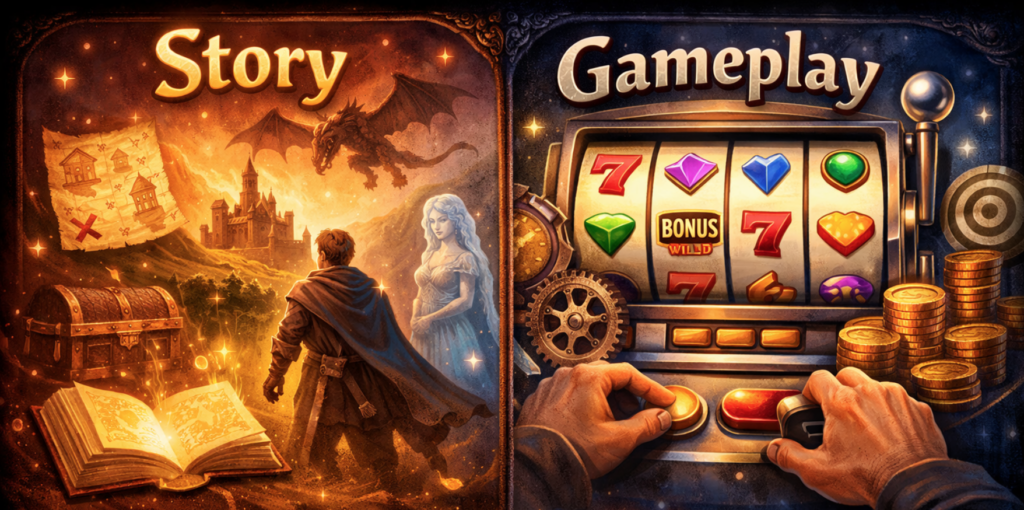
Some games stay in the mind long after the screen goes dark. It is not always because they look big or loud. Very often, it is because they make the player feel something while also giving them something good to do. That is where story and gameplay meet. One gives meaning. The other gives action. When both work well together, a game becomes more than a way to pass time. It becomes a place the player wants to return to.
A lot of people argue over which matters more. Some say story is the heart. Others say gameplay carries everything. The truth is softer than that. A strong game usually knows how to let both sides help each other.
Story gives the game a reason to matter
A game without story can still be fun, but story often gives the player a reason to care. It helps the world feel fuller. It gives the player a goal that means more than points or levels. A simple task can feel bigger when the player knows who they are helping, what they are protecting, or what they are trying to overcome.
Story also helps build mood. A quiet game can feel warm and personal because of its writing. A fast game can feel tense because of the world around it. Even small bits of story can do a lot. A line of dialogue, a bit of music, or the look of a place can make a game feel alive in a deeper way.
A good story works best when it stays natural
Players do not always need long speeches or heavy scenes. Sometimes the best story is the kind that moves quietly in the background. It lets the player keep going while still feeling that the world means something. That kind of story does not block the game. It walks beside it.
Gameplay is what keeps the hands and mind busy
Story may pull a player in, but gameplay is what keeps the session going. This is the part the player touches. It is the jumping, solving, aiming, building, racing, or choosing. When gameplay feels good, the player wants one more round, one more level, or one more try.
Good gameplay usually feels clear. The player understands what to do, but still has room to improve. It gives challenge without making every step feel tiring. That balance matters a lot. A game can have a rich story, but if the play feels dull or awkward, the player may not stay long enough to enjoy the world around it.
The strongest games let both sides support each other
This is where the real pull often comes from. Story makes the player care, and gameplay gives the care a shape. A sad moment matters more when the player has already spent time moving through that world. A hard level matters more when the player understands what is at stake. In some gaming spaces, people may jump between many kinds of digital entertainment, from puzzle apps to sports updates and even things tied to an online casino, yet the same design truth stays steady. People return to what feels meaningful and good to play.
Real engagement comes from rhythm
A game becomes truly engaging when it finds the right rhythm between feeling and action. Too much story without enough play can feel slow. Too much action without any meaning can feel empty. The best games know when to let the player act and when to let the world speak.
What keeps a game alive
In the end, the real pull does not come from story alone or gameplay alone. It comes from the bond between them. A game lasts when it gives the player something to feel and something to do at the same time. That is what turns a simple screen into a place worth staying in.