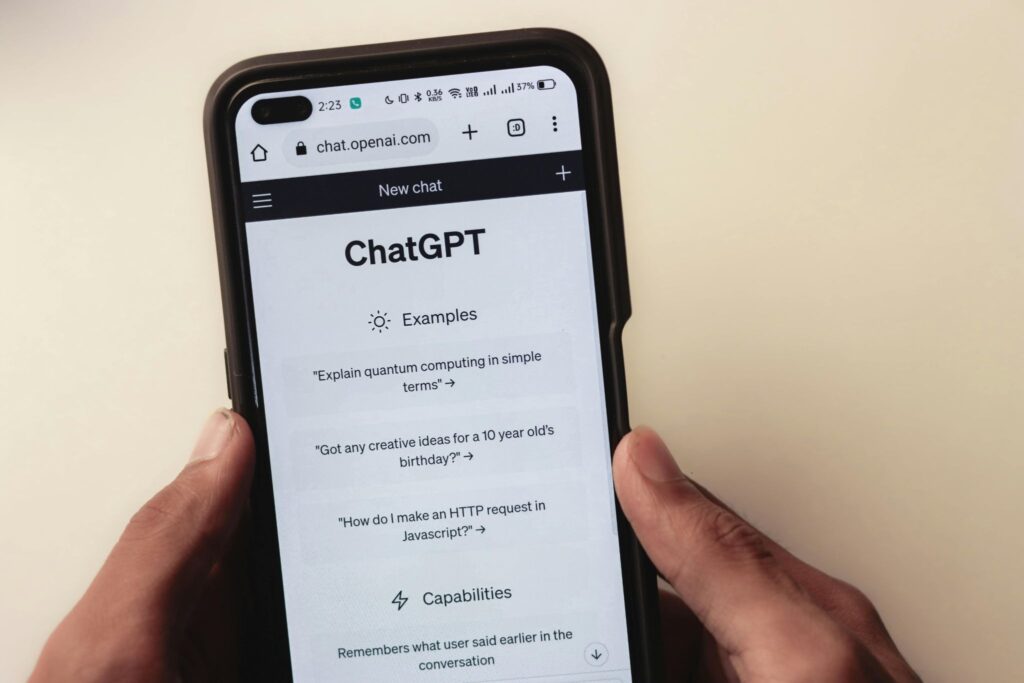
If you’ve used ChatGPT to compare products, look up a service, or narrow down a few options before buying, you’re in very good company. In the Reuters Institute’s Generative AI and News Report 2025, 54% of respondents across six countries said they had seen an AI-generated answer in search during the last week, and 24% said they had used generative AI for getting information in the last week, up from 11% a year earlier.
That gives us a clearer picture of how online discovery is changing. More of us are using AI tools as a first stop when we want quick answers, shortlists, or a simple explanation before we dig deeper. An AI Search Optimization tool exists precisely because this behaviour is now significant enough to track and measure.
So when certain brands keep showing up in those answers, and others don’t, that’s worth understanding.
The encouraging part is that this is not some invisible mystery. There are patterns behind it, and once you know what they are, you can use AI tools more confidently and read those polished answers with a sharper eye.
The New Shop Window
When you ask ChatGPT for the best wireless earbuds, the easiest mobile plan, or a few reliable travel bags, you’re doing something that is becoming normal. The Reuters Institute found that 61% of respondents had used a standalone generative AI system at some point in 2025, up from 40% in 2024, while 34% said they were using generative AI weekly, nearly double the 18% recorded the year before.
That weekly habit is a big deal because it changes how brands reach us. In the same study, ChatGPT was the most-used individual AI system, with 22% of respondents saying they had used it in the last week.
If that sounds abstract, think about how we usually shop online. We rarely begin by reading ten full websites from top to bottom. We want a first pass, a rough shortlist, a quick sense of what sounds promising. AI answers are starting to fill that role for many people, which means the names shown in that first response can influence what you notice, what you trust, and what you bother to check next.
That does not mean the AI answer is your final answer.
It means the answer has become your first impression.
For us, especially when we’re trying to save time, that changes the rhythm of decision-making. A brand that appears early can feel familiar before we’ve visited its site. A brand that does not appear at all can feel less relevant, even if it would have been a strong option in reality.
That’s why it helps to think of AI as a new shop window. You’re still free to walk further down the street, compare what’s inside, and make up your own mind. Still, the window gets the first glance, and first glances carry weight.
Not Missing, Just Harder to Find
So why do some brands seem to vanish from ChatGPT results while others keep surfacing?
A useful clue comes from AI Brand Visibility products, which tracks daily brand visibility in AI search through prompts, topics, citations, source URLs, sentiment and the top 30 brands by topic, with data available within 24 hours of setup.
That tells us that AI visibility tends to follow the structure of the information surrounding a brand, not just its popularity in the wider world.
Put another way, brands are easier for AI systems to surface when they are clearly connected to the kinds of prompts people ask, when they appear across trustworthy source pages, and when those sources are straightforward for AI systems to cite and reuse. A brand can be well liked, well established, and still be harder for AI to pull into an answer if its signals are scattered or weakly connected online.
For you, that’s a helpful way to read an AI recommendation list. If your favourite brand is absent, you do not have to assume it has become worse overnight. Sometimes it is simply less visible to the system because the supporting information around it is not lining up neatly with the question being asked.
AI answers often reflect what is easiest to connect, cite, group by topic and describe clearly online, rather than every good option available.
That should make us more curious, not more cynical. When we understand that AI answers are built from identifiable signals, we become better at spotting when a result is broad, when it is narrow, and when it deserves a second look.
Helpful Answers With Real Consequences
This gets more interesting when we look at what people do after seeing an AI-generated answer. In the Reuters Institute study, among respondents who had seen AI-generated answers in search, 33% said they always or often clicked source links, 37% said they clicked sometimes, and 28% said they rarely or never clicked through.
At the same time, 50% of that group said they trusted those AI-generated answers.
That means many of us are forming impressions before we ever land on a brand’s website. If you read a concise answer, see a few names repeated, and feel that the summary sounds sensible, your shortlist may already be taking shape. You may still do more research, but the early framing has already done some work.
The commercial side of this is becoming more direct too. Reuters reported on 28 April 2025 that OpenAI rolled out shopping features for ChatGPT search, including personalised product recommendations, images, reviews and direct purchase links, and said ChatGPT search had handled more than 1 billion searches in the previous week. Reuters also reported on 16 July 2025 that OpenAI was exploring an in-ChatGPT checkout system, which would bring discovery and purchasing even closer together.
For us, that can be genuinely useful. Faster comparisons, cleaner summaries and fewer tabs can make shopping less tiring. But it also means we need to stay alert to how those answers are formed.
A simple habit helps. When a recommendation looks good, pause for a moment. Check the sources. Notice whether the same brands appear elsewhere. Ask a follow-up question. See whether the answer explains why those names were chosen, or whether it simply presents them as settled fact.
You do not need to become an expert in AI systems to do this well. You just need to stay a little more conscious while the tools get smoother.
Visibility Is the New First Impression
AI search is becoming part of how we compare products, services and brands, and the evidence shows that this behaviour is already widespread. The brands that appear in ChatGPT are not chosen out of thin air; they are tied to prompts, topics, citations, source pages and other signals that can be tracked and understood.
That should leave you feeling better informed, not overwhelmed.
When you know that AI answers are shaped by visible patterns, you are in a stronger position to use them well. You can enjoy the convenience, move faster when it helps, and still keep your own judgement in the driver’s seat.
As AI tools move closer to shopping, recommendations and even payment, that small bit of awareness becomes one of the best habits you can bring to the internet. If AI is becoming one of the first places we turn for choices, it pays to get better at reading what it puts in front of us.