Forex trading in 2026 looks very different from a decade ago. Screens still matter, but software now leads the process. Traders rely on platforms, APIs, and automation to act faster than human reaction time.
The core shift is simple. Decisions move from manual execution to system driven execution. A trader sets rules. A platform follows them.
Think of it like driving. Manual trading is steering every turn yourself. Automated trading is cruise control with guardrails. You still define the route, but the system handles the road.
Modern Forex entry is no longer about watching charts all day. It is about choosing the right tools, connecting data sources, and letting systems execute with discipline.
The Shift From Manual Trading To Tech Driven Systems
The Forex market used to depend on human reaction. Traders watched charts, read signals, and executed orders by hand. Speed mattered, but human limits always slowed decisions.
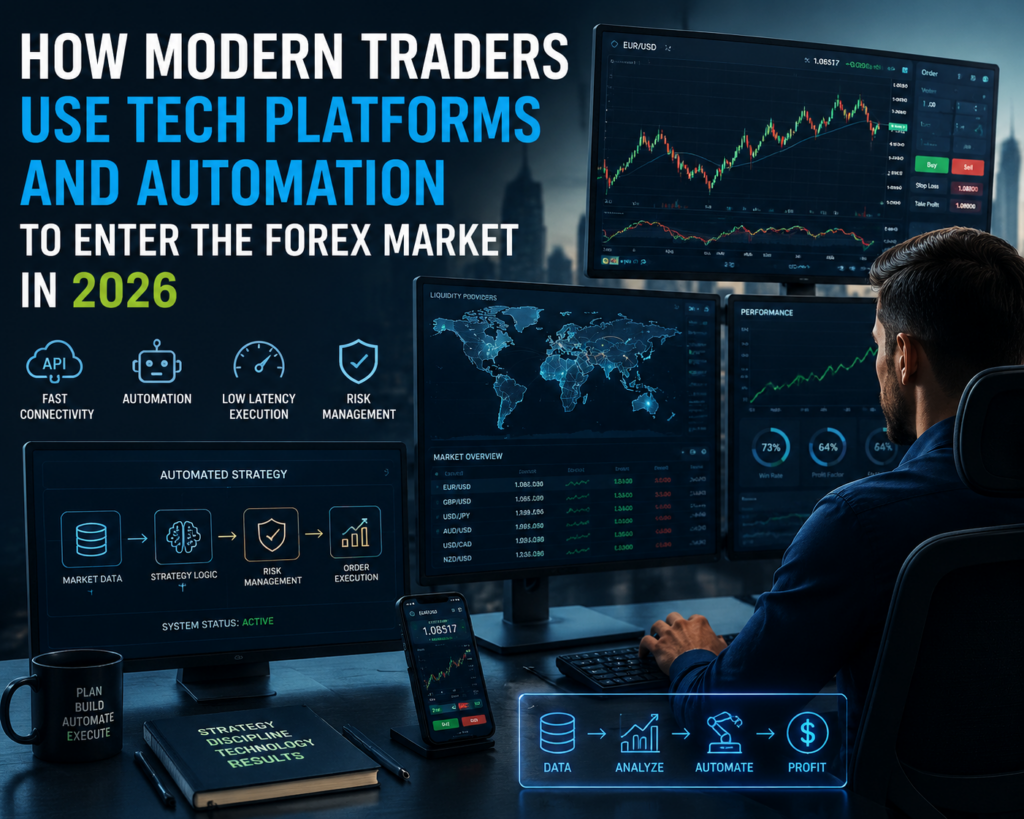
In 2026, the structure changed. Trading systems now connect data feeds, execution engines, and risk controls into one loop. The trader defines logic. The system runs it without hesitation.
A modern setup often includes three layers:
- Data layer for price feeds
- Logic layer for strategy rules
- Execution layer for order placement
This structure removes emotional delay. It also reduces execution errors that come from manual input.
At the center of this ecosystem sits the infrastructure provider. A forex broker now acts less like a simple order handler and more like a technology bridge between traders and global liquidity. It connects platforms, APIs, and market access in real time.
Think of it like a railway system. The trader builds the schedule. The broker provides the tracks, signals, and switching system that moves the trains safely and quickly.
This shift explains why automation is no longer optional. It is the default layer of modern Forex entry.
Core Tools That Power Automated Forex Trading
Modern Forex trading depends on connected tools. Each tool handles one job in the chain. Together they form a system that reacts faster than any manual trader.
Automation does not mean one single program. It means a stack of technologies working together.
Here are the main components traders use in 2026:
- Trading platforms
They show prices, charts, and order books in real time. They act as the control center where strategies are built and monitored.
- APIs and connectivity layers
They link strategies to market execution. They allow systems to send and receive data without manual input.
- Algorithmic strategy engines
These run predefined rules. Example: buy when price breaks a level, sell when volatility spikes.
- Risk management modules
They control exposure. They set stop levels, position sizes, and limits automatically.
- Data feeds and analytics tools
They supply raw market data. Clean and fast data improves decision accuracy.
- Execution routing systems
They send orders to liquidity sources with minimal delay. Speed matters here more than anywhere else.
Each layer works like a gear in a machine. If one slows down, the whole system loses efficiency.
This is why modern traders focus less on prediction and more on system design. The goal is not to guess the market. The goal is to build a structure that reacts consistently under different conditions.
How Automation Changes Decision Making In Trading
Automation changes the way traders think about decisions. In manual trading, each action feels separate. You watch, you decide, you act. In automated systems, decisions are prebuilt and executed instantly when conditions are met.
This removes hesitation. It also removes emotional pressure from fast markets.
Instead of asking “should I enter now”, traders define rules like:
- If volatility rises above a level
- If price crosses a threshold
- If trend confirms across timeframes
The system then reacts without delay.
This shift also changes responsibility. The trader is no longer focused on each trade. The trader focuses on building and refining logic.
As one common principle in algorithmic trading puts it:
“The quality of a trading result depends less on individual decisions and more on the consistency of the system that executes them.”
This idea explains why many modern traders spend more time testing strategies than watching charts. Backtesting, simulation, and parameter tuning become the core work.
Automation does not remove decision making. It moves it earlier in the process, from execution to design.
The New Entry Point To Forex In 2026
Forex trading in 2026 no longer starts with a chart. It starts with a system.
Traders enter the market through platforms, data layers, and execution tools, not manual reactions. The focus shifts from predicting price moves to building structures that can respond to them.
Automation defines this new entry point. It reduces delays, removes emotional decisions, and turns trading into a repeatable process. The trader sets the logic once, then refines it over time.
Technology also changes access. With modern infrastructure, including integrated trading ecosystems and forex broker solutions, traders can connect directly to global liquidity, run strategies at scale, and manage risk in real time.
The result is a different mindset. Success depends less on speed of reaction and more on quality of system design. The best traders are no longer just market watchers. They are system builders.
In this environment, entering Forex means entering a tech stack first, and the market second.