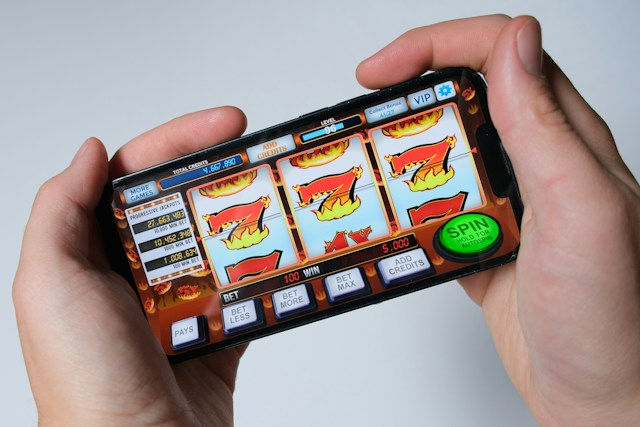
Two hundred free spins sounds like twice as much as a hundred. It's the kind of arithmetic a promo banner counts on, and it works in any language: a Finnish site dangling ilmaiskierroksia and an English one shouting about free spins are playing the same card, a big number in a big font. What the number leaves out is nearly everything. How much is each spin staked at? On which slot? And if something does come back, can it be withdrawn, or does it turn into bonus money with a list of conditions attached? A spin count answers none of that.
What one spin is actually worth
Every free spin is a real spin at a fixed bet, paid for by the casino. The bet is usually the lowest the slot allows, and on a lot of games that's 10 cents. Here's the unglamorous math: 100 spins at 0.10 is ten euros' worth of play. Ten. A package of 25 spins staked at a euro apiece is worth two and a half times as much, and it looks puny on a banner.
Go one step further, and the figure shrinks again. Slots pay back less than they take in over the long haul (that's the return to player percentage, typically somewhere in the mid-90s), so ten euros of spins can be expected to return a bit under ten on average. Any one batch may land well above that or at zero, which is the nature of a slot. Still, spins multiplied by stake is a far better yardstick than spins alone.
Somebody else picks the game
Free spins rarely roam. They're tied to one slot, sometimes a shortlist of three or four, and the casino does the choosing. Often it's a new release the operator wants eyes on, or an old crowd-pleaser. A player with no interest in that particular slot is getting less than the banner suggests.
Does it matter which? Quite a bit. Studios commonly supply the same slot in several RTP settings, and the casino decides which one runs, so the help screen inside the game is the only place to see the real figure. Then there's temperament.
Steady slots and streaky ones
Some slots pay small amounts often. Others go quiet for long stretches and then pay more in one go, and the industry word for that is volatility. Twenty spins on a highly volatile game will, more often than not, finish with little or nothing to show, simply because twenty spins isn't enough to run into the rare larger payout. On a low-volatility slot, the same twenty will more likely leave a modest balance behind. Neither is better as entertainment. They're just different bets, and an offer that names its game is at least saying which kind.
When winnings arrive as bonus money
Here's where most of the value gets decided. At plenty of entertainment platforms, whatever the spins bring in isn't cash. It lands in a bonus balance and has to be wagered a set number of times before it can leave. Suppose the spins produce 12 euros and the terms say 40x, which is not unusual. That's 480 euros of bets to place first, and with a house edge on every one of them, the 12 will probably be worn down long before the target is reached.
Other offers skip all this and pay spin winnings straight into the cash balance, usually advertised as wager-free or no-wagering spins. They tend to come in smaller batches. Smaller, and frequently worth more.
Putting two offers next to each other
Take a made-up pair. Offer A: 200 spins at 0.10 on a single slot, winnings subject to 40x wagering, capped at 50 euros, seven days to finish. Offer B: 30 spins at 0.50 on the same slot, winnings paid as cash, no cap. A is 20 euros of play, and B is 15, so A wins on paper. But A's winnings have to survive 40 rounds of wagering and can't exceed 50, while whatever B returns belongs to the player on the spot. Run the numbers, and B comes out ahead for most purposes, with less than a sixth of the spins.
Bet limits while the bonus is live
A rule that trips people up sits in the wagering section. While bonus money is being played through, there's a maximum bet per spin, commonly a few euros, and going over it even once can void the bonus and whatever came from it. The slot won't stop anyone from doing it. Nothing flashes, no warning pops up. It can turn up later, at withdrawal.
Game weighting belongs here too. Wagering done on slots normally counts in full, but table games may count at a fraction or not at all, and a handful of slots are often excluded by name.
The clock, or rather two of them
Free spins expire. A day, three days, a week; it's in the terms. Some casinos also hand spins out in daily batches, 20 a day for five days, say, and each batch lapses if it isn't used within 24 hours. A headline of 100 free spins doesn't mention that part.
The second clock starts once the spins are done, because wagering has its own deadline. Run out of time, and the bonus balance is cleared. Unused spins go the same way.
What the casino asks for first
No-deposit spins cost nothing to claim beyond registering, and they usually carry the toughest conditions, the low caps especially. Deposit spins need a qualifying payment, and the minimum is worth holding up against the value of the spins: 20 euros in to unlock ten euros of play is a different deal than it sounds. Sometimes the deposit itself has to be wagered once before the spins are released.
The method matters as well. Certain e-wallets are excluded from bonuses at many casinos, so a deposit made that way simply doesn't trigger the spins. The list of excluded methods is in the bonus terms. And asking for a withdrawal while wagering is still open normally cancels the bonus, spins, and all.