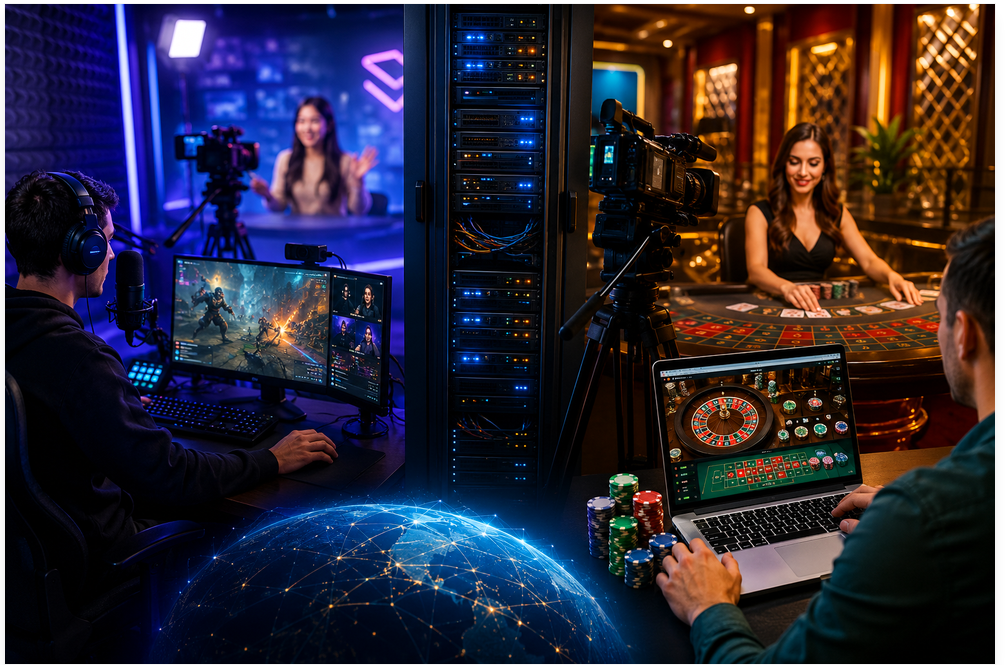
Live digital platforms have changed how people watch content online. A sports broadcast, a gaming stream, and a live casino platform may look very different. Yet, they often depend on similar technology behind the screen.
Both online casinos and regular streaming services need cameras, servers, fast networks, and stable software. They also need systems that can handle many users at the same time. The main difference is what happens during the live session. The technology behind platforms such as PayPal casino Australia services can also be studied alongside regular streaming systems, since both depend on secure data processing, stable servers, and fast online connections.
Cameras and Studio Hardware
Good video starts with good camera equipment. Streaming services use many types of cameras. A small creator may use a webcam or a phone. A large studio may use professional cameras with high-quality lenses and sensors.
Live casino studios also use professional camera systems. Several cameras may show the same table from different angles. The goal is to provide a clear and stable video feed.
Lighting is also important for both types of platforms. Poor lighting can make even an expensive camera produce weak results. Studios use lights to keep the image clear and balanced.
Microphones are another key part of the setup. They capture speech and other sounds. Clear audio is important because viewers need to understand what is happening without noise or delays.
Video Encoding and Processing
Raw video files are very large. Sending them directly over the internet would require too much bandwidth. This is why live platforms use video encoders.
An encoder turns raw video into a smaller digital stream. The process reduces the amount of data while keeping the image clear.
Regular streaming services use this technology for gaming, news, sports, and entertainment. Online casino platforms use similar systems for live video from studios.
Hardware encoders can be useful when a platform needs stable performance for long periods. Software encoders offer more flexibility and can run on powerful computers or servers.
Servers Handle the Heavy Work
Servers are at the center of most live platforms. They receive data, process requests, and send information to users.
A popular streaming service may have thousands or even millions of people watching content at once. Its infrastructure must handle sudden changes in traffic. A major sports event, for example, can create a huge increase in viewers.
Online casino platforms face a similar technical problem. Many users may connect to live sessions at the same time. The servers must keep video feeds and interface data working together.
However, live casino systems often process more interactive data during a session. The video is only one part of the platform. The interface may also display game information and other updates.
Low Latency Matters
Latency is the delay between an event and the moment it appears on a user’s screen.
Low latency is useful for almost every live service. During a video game stream, viewers want to see the action soon after it happens. During a live sports broadcast, long delays can also reduce the quality of the experience.
It is also important for live casino platforms because the video and interface need to stay in sync. A large delay could cause the visual feed and on-screen information to appear at different times.
Platforms reduce latency through faster servers, efficient software, video compression, and strong network connections.
CDN Technology Connects Global Users
A content delivery network, or CDN, helps platforms deliver content across long distances.
Instead of sending every video stream from one central server, a CDN uses servers in different locations. Users can receive data from a server that is closer to them.
This approach can reduce loading times and network pressure. Video services, news websites, gaming platforms, and other large online systems widely use it.
Live casino platforms can use the same type of infrastructure. From a technical point of view, both industries need to deliver large amounts of data to users in many regions.
Backup Systems Keep Platforms Running
Live services cannot easily stop when a piece of hardware fails. For this reason, professional platforms often have backup equipment.
A studio may have extra cameras, network connections, power systems, and servers. If one component stops working, another can take over.
Cloud infrastructure can provide another layer of support. Platforms can add computing resources when traffic rises. They can also spread workloads across several systems.
Similar Technology, Different Purposes
Online casinos and regular streaming services serve different markets, but their technical foundations have much in common. Both depend on cameras, microphones, encoders, servers, CDNs, and reliable internet connections.
The biggest differences appear in how these systems use live data. A normal streaming platform mainly sends video and audio to viewers. A live casino platform combines streaming with interactive software and real-time information.
Looking at these platforms from a technical point of view shows how modern streaming infrastructure can support very different types of online services.