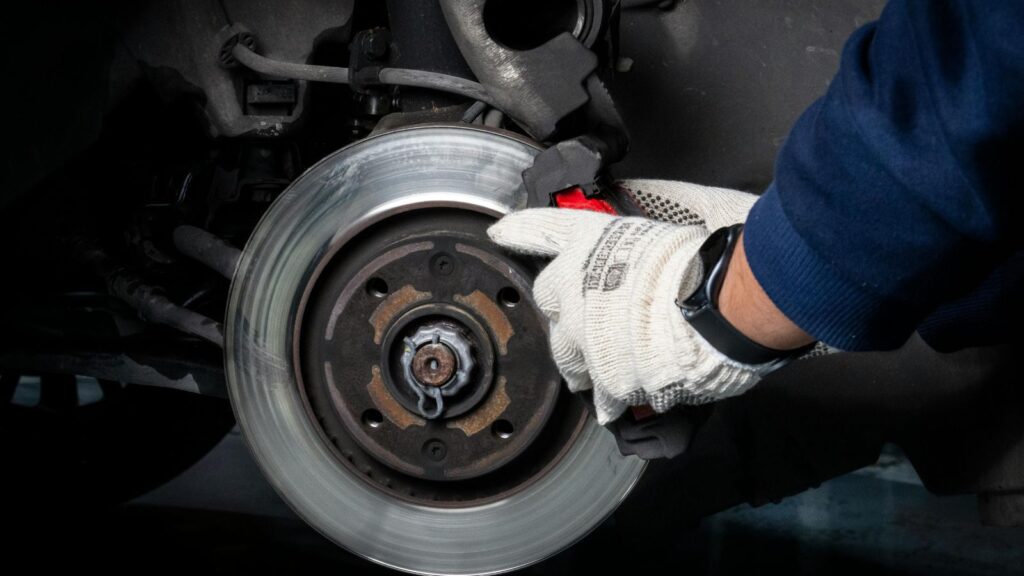
Wear indicator brake pads are standard on virtually every modern car. The spring steel clip that makes the warning possible is one of the most overlooked safety components in the vehicle.
Most drivers have heard it at some point — a high-pitched squeal from the wheel well that disappears when the brake pedal is pressed. It is easy to ignore. It is not meant to be.
That sound comes from the wear indicator on the brake pad: a small, precisely formed piece of spring steel that contacts the rotor when the friction material wears down to its minimum safe thickness. It is a simple mechanism, but the engineering behind it is more demanding than it looks.
How Brake Wear Indicators Work
Wear indicator brake pads are built around a single principle: stay silent during normal braking, and produce a clear, consistent audible signal the moment the pad reaches its wear limit — typically around 2–3 mm of remaining friction material.
The disc brake wear indicator is clipped onto the pad and positioned so that it sits just clear of the rotor surface during normal operation. As the lining wears down, the indicator moves closer until metal-to-metal contact occurs. The resulting vibration generates the characteristic warning tone that tells the driver it is time to act.
On vehicles with electronic monitoring, a brake pad wear indicator may also include a sensor wire that breaks a circuit at the wear threshold, triggering a dashboard warning light. Both approaches serve the same purpose: they give the driver a defined window to respond before safety is at risk.
Why Precision Matters
The reliability of wear indicator brake pads depends entirely on the consistency of the indicator itself. A clip that is too stiff will contact the rotor prematurely and generate false warnings. One that is too soft may deform under heat and braking pressure before it ever signals at all.

Spring steel — the same material used in precision valve springs, retaining clips and structural elements throughout the automotive drivetrain — must be formed, hardened and finished to exact tolerances to behave predictably across the full range of temperatures and loads a vehicle encounters over its lifetime.
For a brake shoe wear indicator used in drum brake applications, the demands are slightly different but equally exacting. The geometry of the contact point, the spring rate of the material and the position relative to the friction lining all determine whether the warning arrives at the right moment — not too early, not too late.
A Component Category Under Pressure
The automotive industry’s push toward tighter safety standards and longer service intervals has increased scrutiny on every part of the braking system. OEM specifications have tightened, quality audits have become more rigorous, and the cost of a warranty claim tied to a faulty brake lining wear indicator — in both financial and reputational terms — has made tier-one suppliers increasingly selective about where their components come from.
Electrification adds another dimension. Battery-electric vehicles rely heavily on regenerative braking, which significantly reduces friction pad wear. That shift may extend pad life, but it also raises the stakes for the mechanical wear indicator: because the visual and tactile cues that experienced drivers associate with worn brakes may no longer apply in the same way, wear indicator brake pads become a more critical checkpoint than ever.
Sourcing And Quality
For workshop operators and procurement teams sourcing wear indicator brake pads for OEM replacement or aftermarket applications, the questions are consistent: What steel specification is used? What are the dimensional tolerances? How is heat treatment validated? Does the supplier have documented experience within automotive quality systems?
These are not abstract concerns. A brake pad wear indicator that fails to perform — whether it warns too early, too late or not at all — is a safety-relevant defect. In a product category where the component cost is low and the consequences of failure are not, quality traceability is not optional.