AISI 440C is a high-carbon martensitic stainless steel developed for applications where high hardness, strength and wear resistance are more important than maximum corrosion resistance.
- AISI 440C chemical composition and stainless steel properties
- Mechanical properties depend on heat treatment
- Heat treatment: from maximum softness to maximum hardness
- Corrosion resistance: good, but not its main advantage
- Forging, machining and welding AISI 440C
- Where is 440C used?
After suitable heat treatment, the grade can reach about 60 HRC, which explains its use in ball bearings, bearing races, valve parts, pump parts, molds and other heavily loaded components.
AISI 440C chemical composition and stainless steel properties
The high carbon content is central to the behaviour of 440C stainless steel. Typical composition includes approximately 0.95–1.20% carbon and 16–18% chromium, with smaller additions of manganese, silicon and molybdenum depending on specification. ASTM A276 is one of the standards covering 440C bar products.
Compared with AISI 440A and 440B, grade 440C contains more carbon. This gives it higher hardenability, maximum hardness and excellent wear resistance after heat treatment, but also lowers ductility and makes fabrication more demanding.
Mechanical properties depend on heat treatment
AISI 440C is generally supplied in an annealed condition when machining or further processing is required. In the fully annealed state it is much softer and easier to machine, while hardened and tempered material provides extreme high strength and wear resistance.
Published data show how strongly properties change with condition. A hardened, oil-quenched and tempered sample can reach an ultimate tensile strength close to 1965 MPa and Brinell hardness around 580, whereas annealed material is far softer.
Heat treatment: from maximum softness to maximum hardness
For maximum softness, 440C can be annealed at roughly 843–871°C and then cooled slowly in the furnace. Hardening is commonly carried out around 1010–1066°C, followed by warm oil quenching or air cooling. Tempering at relatively low temperature can retain hardness close to 60 HRC.
Corrosion resistance: good, but not its main advantage
AISI 440C offers good corrosion resistance in fresh water, mild domestic environments and contact with various petroleum products, but it should not be treated like an austenitic stainless grade. Its corrosion resistance is only moderate when exposed to more aggressive chemicals or industrial environments.
Forging, machining and welding AISI 440C
The grade should be pre-heated before forging and then brought gradually to forging temperature. Forging should commence immediately once the correct range is reached, and the material should be cooled slowly afterwards. Annealing immediately after forging helps restore maximum softness and prepares the material for machining.
In the annealed condition, 440C is machinable but produces tough, stringy chips, so chip curlers or breakers are useful. Cold working is limited; the steel is only slightly cold workable compared with softer stainless steels. Welding is possible but rarely preferred because the combination of high carbon and high hardenability increases cracking risk. Preheating, controlled heat input and post-weld treatment may be necessary.
Where is 440C used?
Typical applications include:
- ball bearings and bearing races,
- pump and valve parts,
- wear-resistant shafts and components,
- molds and tooling,
- precision mechanical parts,
- blades and cutting components.
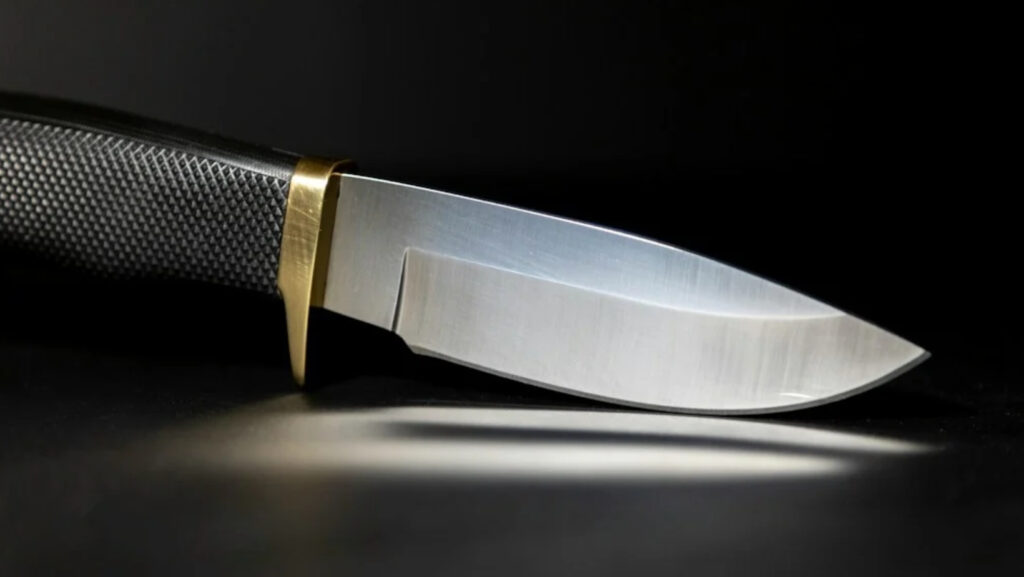
For Knifemaker steel 440C, the attraction is straightforward: the grade can combine high hardness, good edge retention and useful corrosion resistance in one material.
AISI 440C is best chosen for parts requiring high hardness and wear resistance rather than maximum toughness or chemical resistance. Its final performance depends heavily on the heat-treatment condition, so the grade designation alone never tells the full story.